













Now Reading: US firms retain H-1B hiring despite Trump-era immigration restrictions
-
01
US firms retain H-1B hiring despite Trump-era immigration restrictions

US firms retain H-1B hiring despite Trump-era immigration restrictions

US employers are reshaping foreign-worker hiring as Trump administration measures make H-1B sponsorship costlier and less predictable, The Times of India reports. Envoy Global’s 2026 survey of 519 HR and mobility professionals…
The Story in Brief
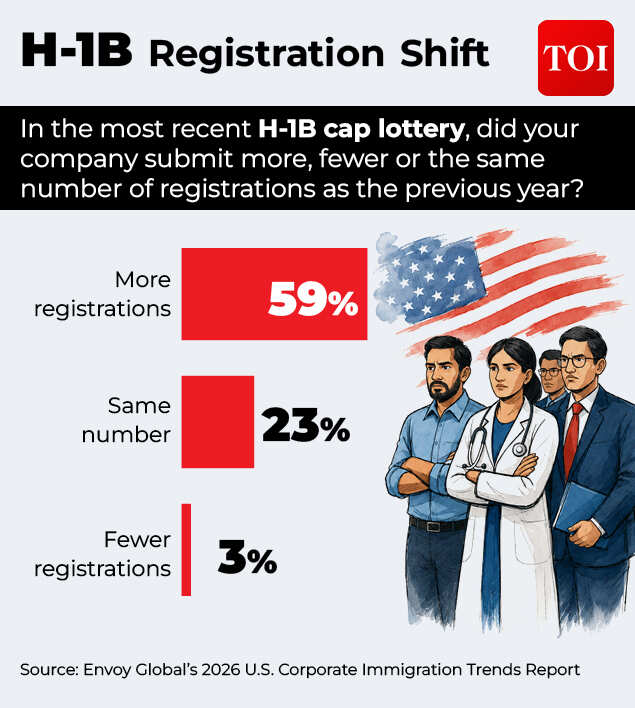
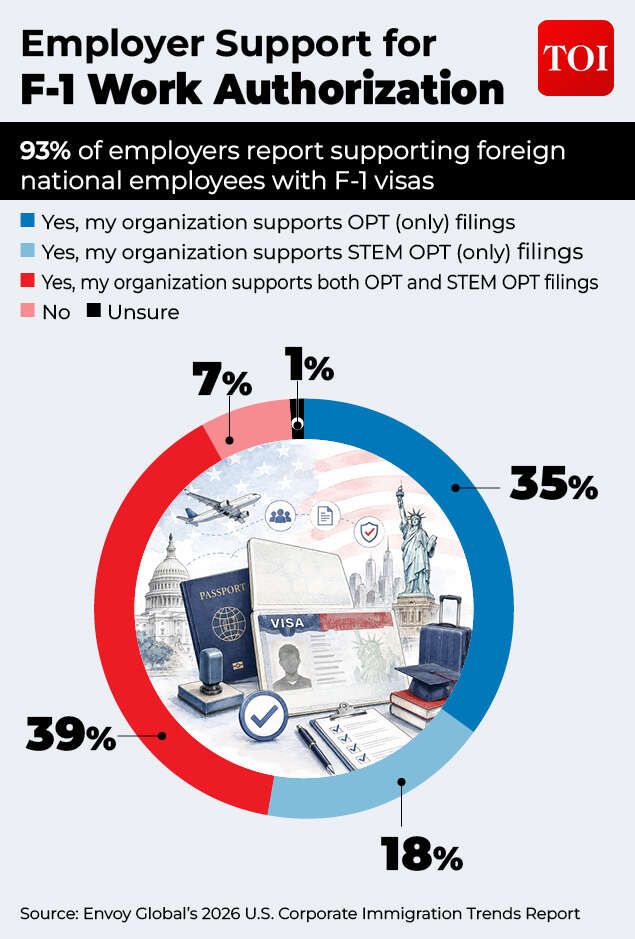
US employers are reshaping foreign-worker hiring as Trump administration measures make H-1B sponsorship costlier and less predictable, The Times of India reports. Envoy Global’s 2026 survey of 519 HR and mobility professionals found nearly six in 10 firms submitted more H-1B registrations than last year, although repeat entries mean registrations do not equal new hires. The report said 93% support F-1 work authorisation, including OPT and STEM OPT, while 83% use premium processing.
The Economic Times reports that research does not show broad job displacement from foreign STEM workers. A 2024 MIS Quarterly study found expanded STEM OPT increased employment among domestic STEM workers. A 2026 paper found STEM degree completions rose 14% to 15%, including among domestic students. NFAP research found foreign OPT workers made up less than 1% of STEM bachelor’s-degree workers in 2016.
The Indian Opinion
The loudest claims on both sides are too simple. Saying every foreign STEM worker takes an American job ignores studies finding higher domestic employment and a small programme footprint. Saying tighter rules have no cost ignores employers’ reported fees, uncertainty and repeated lottery entries. The useful test is not registration volume or political rhetoric, but whether domestic STEM employment, wages and degree completions change after the new rules take effect.
Sources (2): timesofindia.indiatimes.com, hr.economictimes.indiatimes.com
This story was synthesised by AI from the 2 sources linked above.
Updated: this story now draws on 2 sources.