













Now Reading: Zoho’s Sridhar Vembu warns India of worsening graduate job crisis
-
01
Zoho’s Sridhar Vembu warns India of worsening graduate job crisis

Zoho’s Sridhar Vembu warns India of worsening graduate job crisis

The Story in Brief
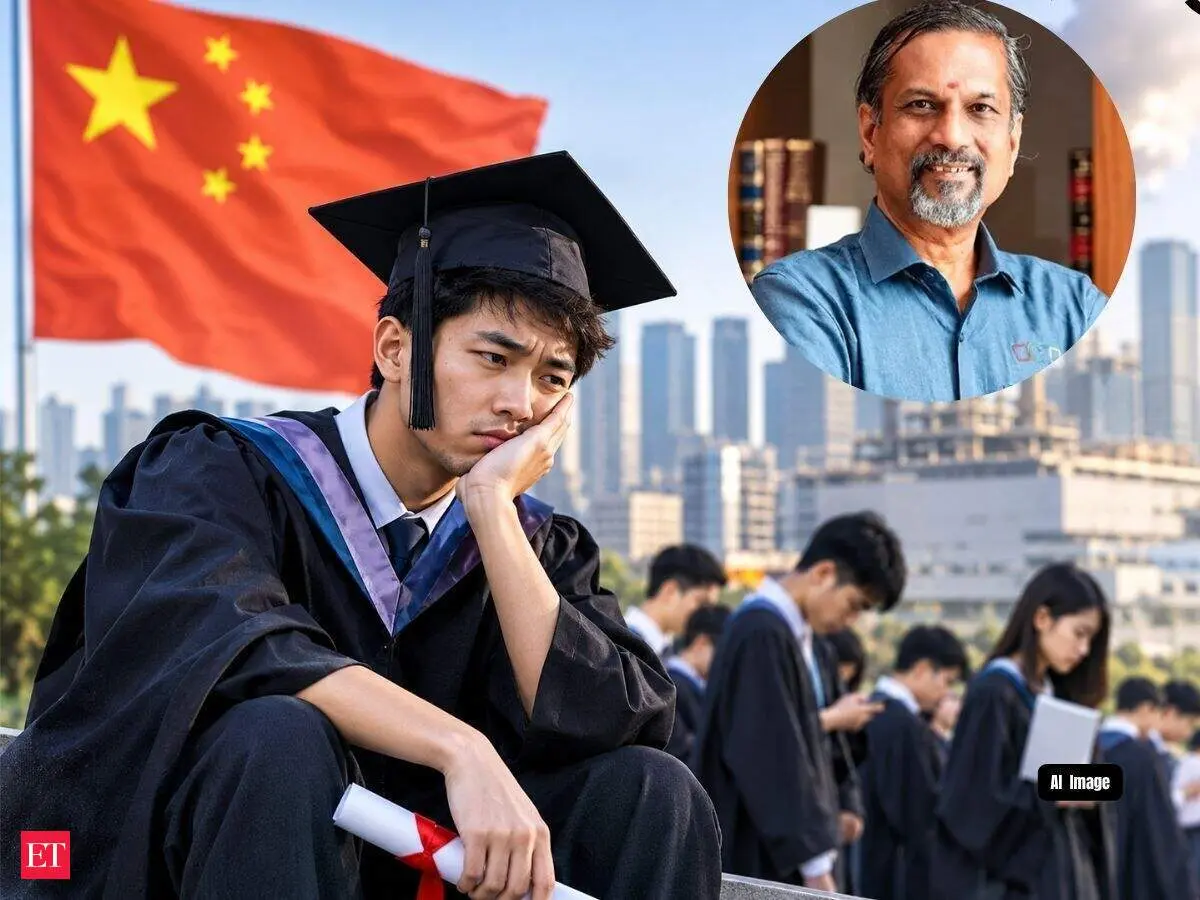
Zoho founder Sridhar Vembu has warned that India could face a worsening employment crisis for educated youth, pointing to China’s struggle to create jobs despite its industrial strength. In an X post on 9 November, Vembu noted that about 70 per cent of unemployed people in China aged 20 to 24 hold university degrees, and called the situation a warning for Indian policymakers.
Vembu said modern education and economic systems train young people for ‘steady paycheck’ jobs, but those roles are under pressure from automation and AI. He argued for ‘dramatic gains in entrepreneurship and self-employment’, saying the problem ‘is about to get worse, not better’. The Hans India reports China’s unemployment rate at 18 per cent for ages 16 to 24 and 7.4 per cent for ages 25 to 29, with 12.7 million college graduates entering the market in 2026.
Indian Opinion Analysis
The three outlets uniformly report Vembu's warning about China's graduate unemployment rate and the pressure from automation and AI on salaried jobs. Economic Times and India Today both lead with the $1.2 trillion trade surplus paradox and the 70% degree-holder figure among unemployed 20-to-24-year-olds in China, while The Hans India adds a separate unemployment statistic (18% for 16 to 24 age group) and the 12.7 million graduates entering China's job market in 2026. The coverage is straight reporting with no discernible editorial slant: every source reproduces Vembu's X-post text without challenge or amplification. The differences are additions of context rather than competing frames. Vembu's proposed solution, entrepreneurship and self-employment, is carried identically. That uniform wire-copy style means the story's significance lies in the contrast between China's industrial might and its youth job crisis, a contrast Vembu himself draws and the sources simply relay.
Coverage: 3 sources, 3 neutral
Sources (3): economictimes.indiatimes.com (neutral report), indiatoday.in (neutral report), thehansindia.com (neutral report)
This brief was synthesised by AI from the 3 sources linked above, so one read covers every framing they carry. Methodology and corrections.
Update, 9 November 2026: this story now draws on 3 sources.