









Now Reading: Germany evacuates 2,000 as wildfire nears village
-
01
Germany evacuates 2,000 as wildfire nears village


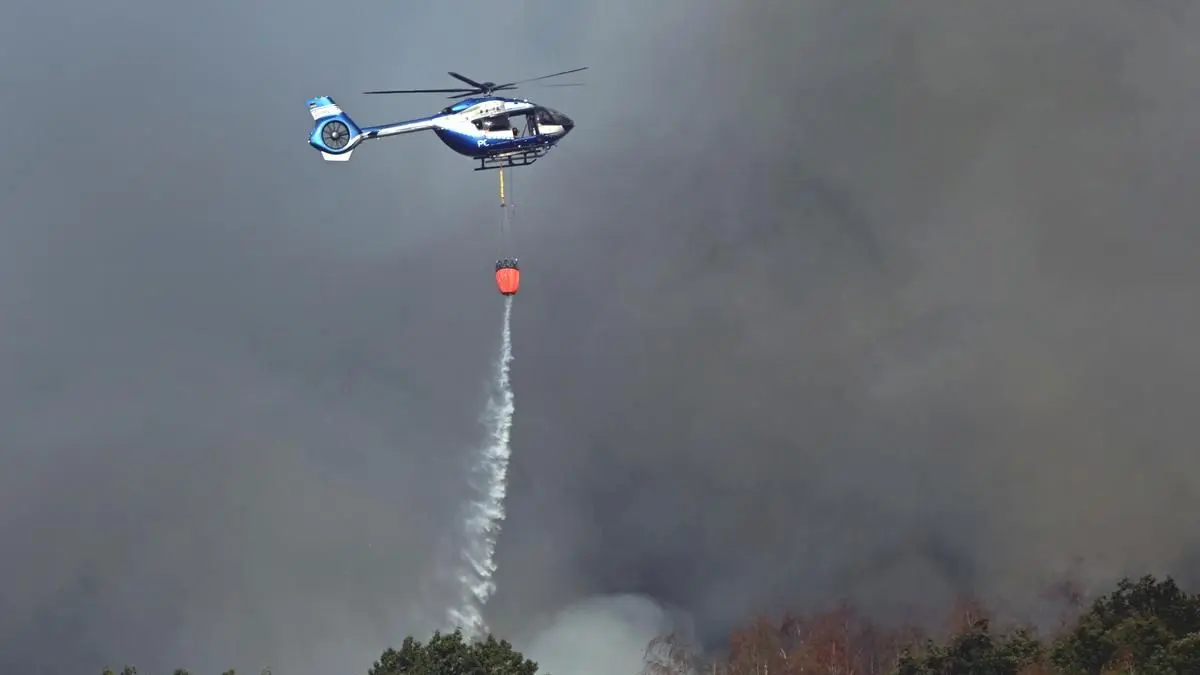
More than 2,000 people fled their homes in western Germany on Friday after a wildfire near the Belgian border spread towards the village of Gey. Residents were asked to leave at 4…
The Story in Brief
More than 2,000 people fled their homes in western Germany on Friday after a wildfire near the Belgian border spread towards the village of Gey. Residents were asked to leave at 4 a.m. local time and go to an assistance centre at a primary school in a nearby village. Mayor Stephan Cranen said the flames were about 300 metres from the village and the situation remained critical. About 300 hectares were burning, and occasional detonations of unexploded World War Two ammunition were heard, firefighters said.
Separately, Belgian firefighters backed by water bombers and helicopters battled a rapidly spreading wildfire at the Hautes Fagnes park near the German border that ravaged at least 1,600 hectares in 24 hours. The nearby village of Sourbrodt, with about 500 residents, was under threat of evacuation. A spokesperson for Wallonia regional authorities said the blaze was already one of the largest in Belgium's history and remained uncontrolled. Operations were complicated by the terrain of heath, peat bogs and wooden boardwalks.
The Indian Opinion
European media are framing this as a dramatic 'climate change wake-up call', but look closer: the German fire is made more dangerous by World War Two munitions lying uncleared for 80 years, a local failing, not a global one. Both fires are in sparsely populated heathland, not suburbs. The real story is how two small villages are managing without panic, using schoolrooms as shelters. The test to watch is whether either fire crosses into a residential street. If it doesn't, the alarmism was noise.
Sources (2): thehindu.com, economictimes.indiatimes.com
This story was synthesised by AI from the 2 sources linked above.
Updated: this story now draws on 2 sources.