











Now Reading: Winning a Pickleball Match Can Still Lower Your DUPR Rating
-
01
Winning a Pickleball Match Can Still Lower Your DUPR Rating


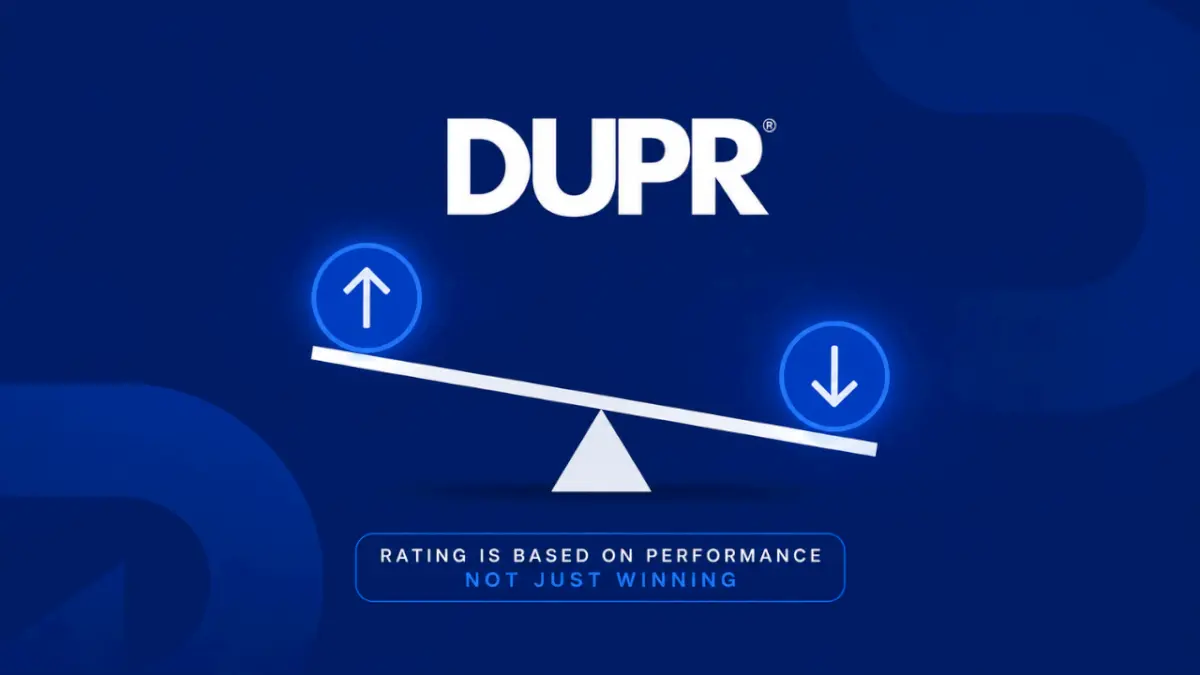
Timesnownews.com explains that DUPR (Dynamic Universal Pickleball Rating) evaluates performance against an expected score, not just match outcomes. A player's rating can drop even after a win if the margin is narrower…
The Story in Brief
Timesnownews.com explains that DUPR (Dynamic Universal Pickleball Rating) evaluates performance against an expected score, not just match outcomes. A player's rating can drop even after a win if the margin is narrower than predicted, and rise after a loss if they exceed expectations. The expected score is derived from both players' pre-match ratings.
Beyond performance relative to expectation, DUPR factors in match type (club and tournament games carry more weight than recreational ones), recency (recent form matters more), and match volume (more matches stabilise the rating). The system aims to prevent rating inflation by avoiding automatic increases for wins, though it can feel counterintuitive to players accustomed to traditional win-loss records.
The Indian Opinion
The main narrative around DUPR is that it is flawed because winning does not always boost a rating. That misses the point. The system is designed to measure skill, not results. Without this adjustment, ratings would inflate from easy wins. Instead of complaining, players should focus on margin of victory and quality of opponents. Watch how a player's rating moves after matches against higher-rated opponents, that is the real test of where they stand.
Source: timesnownews.com
This story was synthesised by AI from the source linked above.