









Now Reading: Two essays ask who owns India’s photographic story
-
01
Two essays ask who owns India’s photographic story


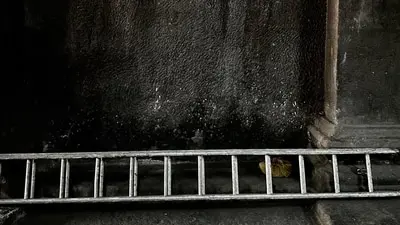
Two essays published ahead of the 80th Independence Day examine who determines India's visual identity, questioning whether historical patterns of foreign editorial control have truly ended. The Wire presents a critical history, arguing that foreign photographers arrive with stories pre-decided by editors in Washington or London, backed by dollars that stretch further than the rupee. It contrasts Communist Party photographer Sunil Janah, who documented the 1943 Bengal famine as evidence for a political argument, with National Geographic's Steve McCurry, whose iconic 'Afghan Girl' photograph was published without a model release.
Hindustan Times, written by artist Samar Jodha, argues that while a billion phones now produce images daily, volume does not equal authorship. The essay notes that algorithms and aggregator accounts now decide which picture of India circulates globally, replacing the old gatekeeper editors but not the problem. It presents photographers such as Gauri Gill and Sohrab Hura as examples of those resisting spectacle-driven imagery, and concludes that the search for an authentic photographic identity is still unfinished, with responsibility now lying with whoever holds the phone.
Both pieces agree the fundamental challenge remains: who gets to tell India's story, and whether the work of reclaiming that narrative is complete.
Indian Opinion Analysis
The coverage is uniform as both pieces are essayistic reflections, not hard news, making direct stance comparison less applicable. TheWire.in leads with a critical historical framing of foreign photography as extraction, using Sunil Janah and Steve McCurry as contrasting case studies. Hindustan Times, while also critical of the past colonial gaze, shifts focus to the present challenge of algorithms and volume, offering a more meditative, personal call to action from an artist rather than a systemic critique. Neither is wire copy, both are argument-driven. A measured reader should note both agree the core issue, who controls India's visual narrative, is unresolved, with The Wire stressing structural economic and institutional power, and Hindustan Times placing responsibility on the individual photographer behind the lens. Watch for the upcoming 80th Independence Day and World Photography Day, events that anchor Hindustan Times' framing.
Coverage: 2 sources, 1 government-critical, 1 neutral
Sources (2): m.thewire.in (government critical), hindustantimes.com (neutral report)
This story was synthesised by AI from the 2 sources linked above. Methodology and corrections.
Updated: this story now draws on 2 sources.