



















Now Reading: Woman carries 97-year-old mother-in-law on banana raft to escape Assam floods
-
01
Woman carries 97-year-old mother-in-law on banana raft to escape Assam floods

Woman carries 97-year-old mother-in-law on banana raft to escape Assam floods

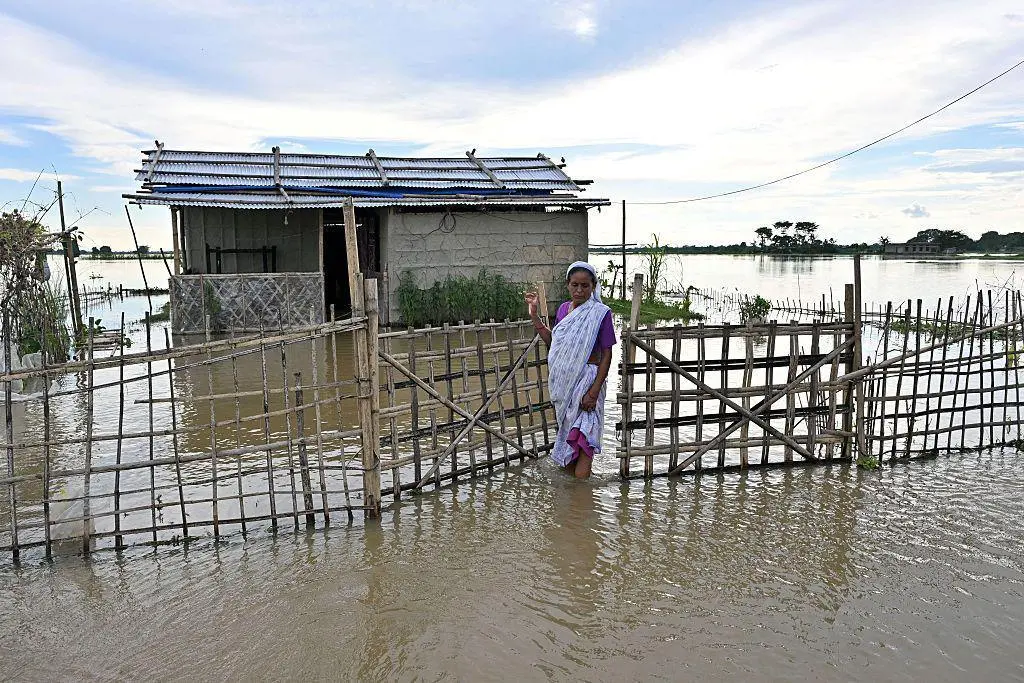
Bornali Baruah, 40, and her husband carried his bedridden 97-year-old mother Lokada Duarah on a makeshift raft of banana trunks through three-foot-deep floodwaters in Assam's Sivasagar district on 19 July. The family reached a shelter camp after an hour-long journey. Baruah’s livestock farm, with 300 goats, 500 ducks and 1,000 chickens, was largely destroyed.
The floods have killed 100 people across Assam, affected 456 villages and 1.2 million people, damaged 19,000 houses and forced 75,000 into 252 relief camps. Baruah, a former journalist who won Assam’s Best Livestock Farmer award in 2019, said no livestock insurance was available. Her village of Charing had not flooded in living memory. Dhrubajyoti Sahariah of Gauhati University said the Brahmaputra’s sediment load and embankment failures have made floods more frequent and severe beyond historical norms.
Indian Opinion Analysis
Assam's Brahmaputra valley has always flooded, but the 2025 monsoon has broken decades-old records in districts like Sivasagar that were once considered safe. The state's flood management relies on embankments built decades ago, which experts say trap sediment and raise riverbeds, making over-topping more likely. With 1.2 million people affected and 19,000 houses damaged, the economic toll runs into hundreds of crores. Livestock insurance, which could have protected farmers like Baruah, remains absent in most rural Assam. The next key signal will be the monsoon forecast for August: if heavy rain continues, breaches could worsen before rivers begin to recede.
Source: bbc.co.uk
This story was synthesised by AI from the source linked above. Methodology and corrections.