
















Now Reading: Youth discontent shapes political power, says analyst
-
01
Youth discontent shapes political power, says analyst


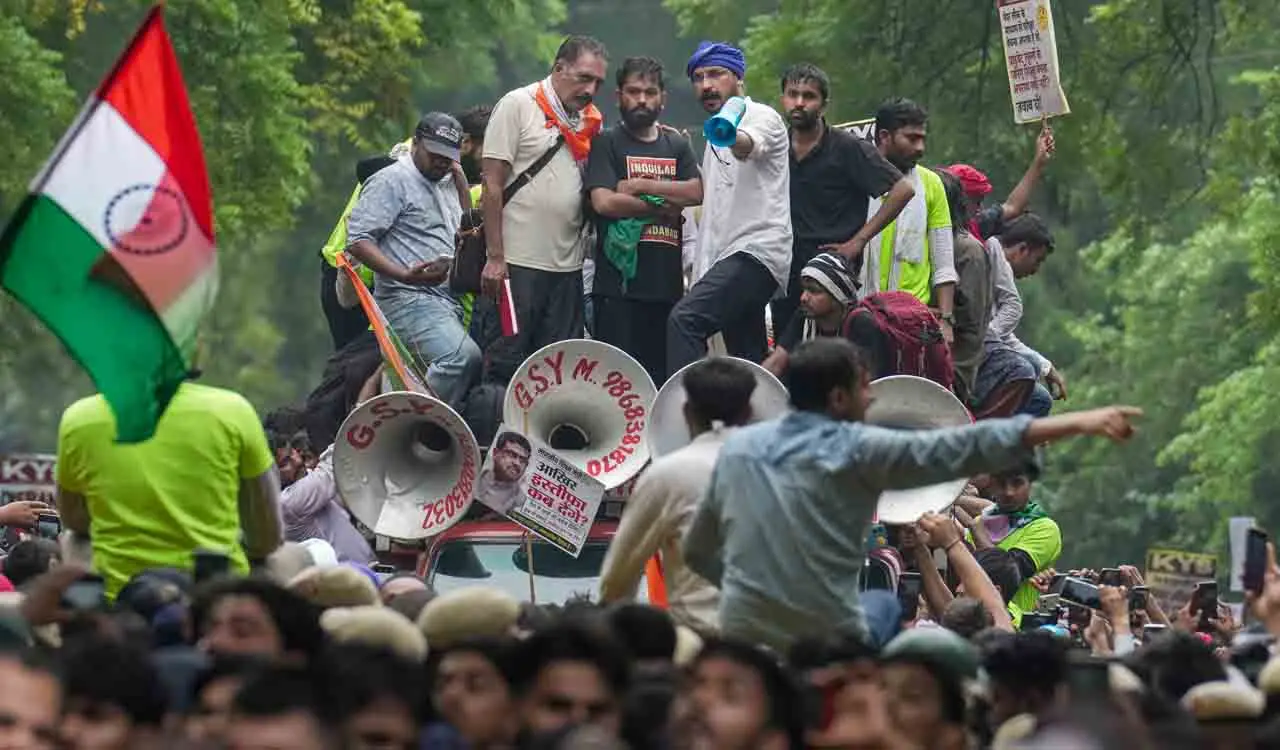
An opinion piece traces a pattern across Indian history: young people losing faith in their future erodes political legitimacy. From Chandragupta Maurya to Bhagat Singh, student agitations to the Anna Hazare movement, and now to the digitally organised Cockroach Janata Party (CJP), youth grievance becomes collective anger, then organisation, then political pressure that can alter governments.
The author, Pendyala Mangala Devi, writes that governments may win young supporters through promises but retain them only through performance. Young people are not just future voters but a test of current legitimacy, the piece argues, citing thinkers from Chanakya to Hannah Arendt. The essay warns that administrative machinery cannot indefinitely command public consent once a generation loses hope.
Indian Opinion Analysis
The piece traces a civilizational through-line of youth-led political change, but it is worth noting that many of the movements cited, from the Telangana agitation to the Mandal protests, were regionally or caste-specific, not national in scope. The essay's own framework suggests the Cockroach Janata Party (CJP) is less a party than a symptom: it channels a digitally native generation's frustration with elite capture, slow job creation, and the gap between democratic promise and lived reality. What happens next depends not on whether CJP wins seats, but on whether established parties absorb its voters' demands, much as the Janata wave of 1977 absorbed the student movement of 1974. The real test is the 2027 Uttar Pradesh assembly election, where CJP claims to field candidates across 30 seats, and where a 2-3% vote swing could trigger a re-evaluation of youth politics by every major party.
Source: telanganatoday.com
This brief was synthesised by AI from the source linked above. Methodology and corrections.