














Now Reading: 5 festive credit traps that can hit your credit score
-
01
5 festive credit traps that can hit your credit score


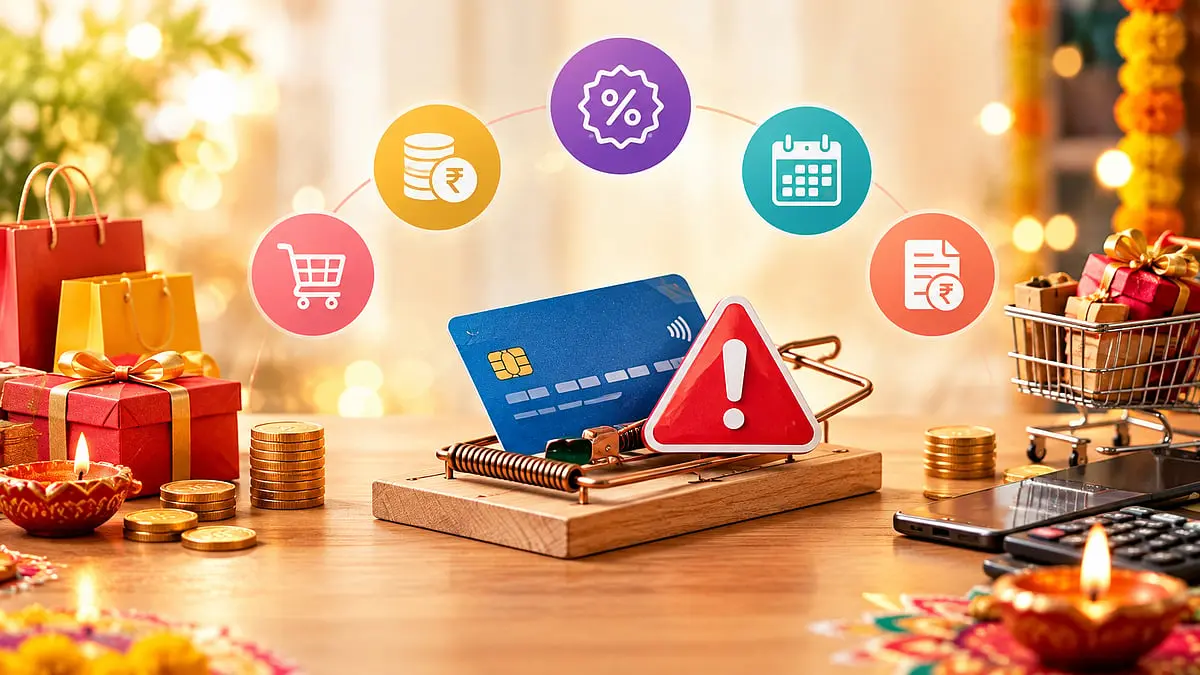
Festive offers like no-cost EMIs, pre-approved limit increases and instant loans carry hidden costs that only surface on your credit report months later, often in January when bills arrive together. A no-cost…
Festive offers like no-cost EMIs, pre-approved limit increases and instant loans carry hidden costs that only surface on your credit report months later, often in January when bills arrive together. A no-cost EMI blocks the full purchase value against your credit limit for the entire tenure, pushing up credit utilisation and pulling down your score even if you never miss a payment.
Interest on no-cost EMIs is not waived but repackaged: GST at 18% on the interest component, a processing fee of 1% to 3%, and the cash discount you gave up all survive. Paying off a loan does not automatically update your credit report, lenders can take up to 45 days to report closure, and errors can leave an account showing as outstanding. A single missed EMI stays on your record for seven years under the Credit Information Companies Act.
Indian Opinion Analysis
The January bill crunch is a known pattern: RBI data from a recent festive cycle showed bank card issuance dropping from roughly 920,000 to 620,000 as delinquencies rose. Credit bureaus assign around 30% weight to credit utilisation, making a single high-utilisation EMI a quiet score-killer for months. The seven-year default record under the Credit Information Companies Act is non-negotiable with lenders. The only remedy for a wrongly reported open account is a No Objection Certificate from the lender filed as a dispute with the bureau, a process that typically takes 30 to 45 days.
Source: thenewsminute.com
This brief was synthesised by AI from the source linked above.