









Now Reading: Aadhaar-RC name mismatch blocks vehicle transfers in Maharashtra
-
01
Aadhaar-RC name mismatch blocks vehicle transfers in Maharashtra


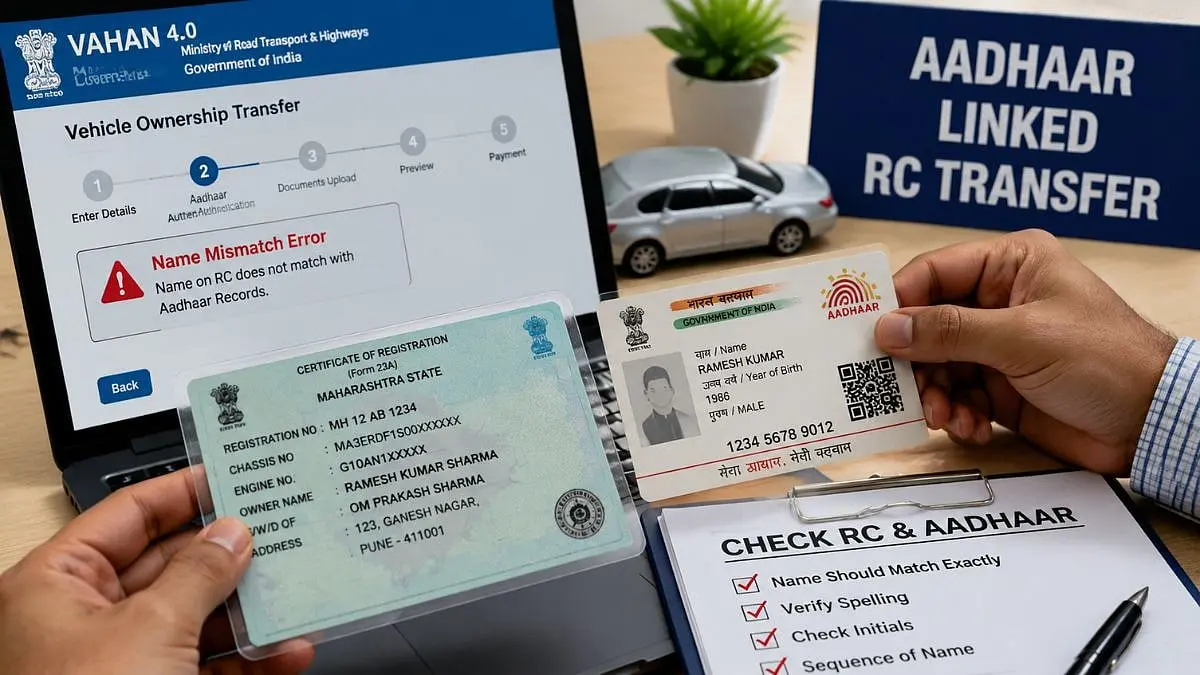
Vehicle owners across Maharashtra are facing delays in transferring ownership or obtaining No Objection Certificates because of a new Aadhaar authentication requirement under the VAHAN 4.0 system. Even minor spelling differences between the name on the Registration Certificate and the Aadhaar card are causing online applications to be rejected, affecting thousands of transactions daily.
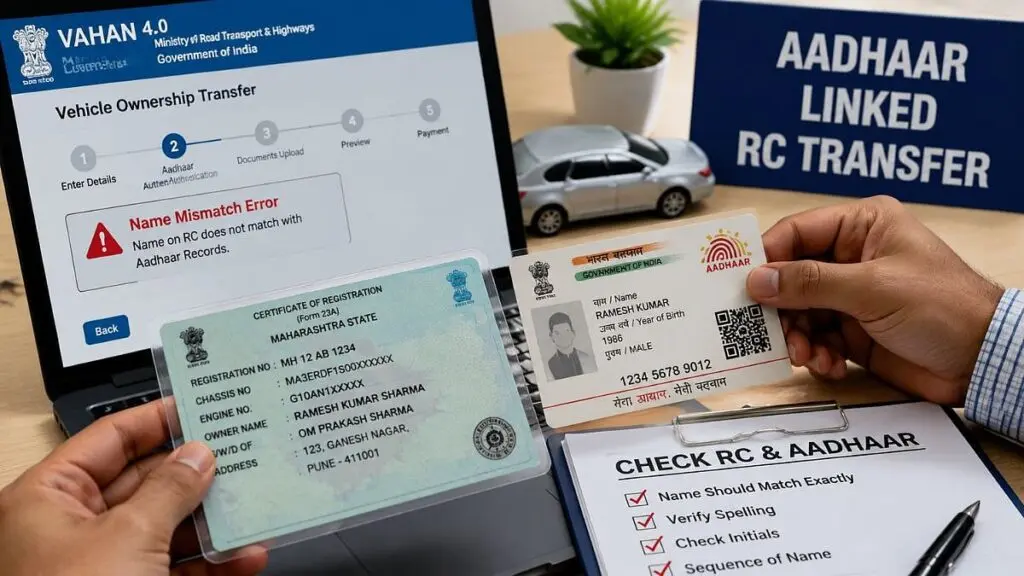
The revised workflow, introduced by the Ministry of Road Transport and Highways on April 8, links Aadhaar e-KYC to ownership transfer and NOC services. Transporters have petitioned the Pune RTO for relief, with the All India Motor Transport Congress suggesting that alternative documents such as affidavits or indemnity bonds be accepted while owners correct discrepancies.
Regional Transport Officer Pallavi Kothawade has advised owners to resolve Aadhaar-RC mismatches in advance, especially those buying or selling used vehicles. The Pune RTO alone receives around 1,000 transfer applications a day, and the rejection rate has prompted calls for a transition mechanism until legacy records are updated.
Indian Opinion Analysis
The VAHAN 4.0 system, rolled out by the Ministry of Road Transport and Highways, was designed to centralise vehicle registration data and curb fraud, but this latest Aadhaar-linking requirement reveals the friction between digital verification and legacy paper records. Individual RTOs, which operate under state transport departments, have limited authority to bypass central system flags, so a statewide workaround would need a formal order from the transport commissioner. The affected cohort includes lakhs of used-vehicle buyers annually across Maharashtra, even a 10% rejection rate in Pune alone could stall 100 transfers a day. The Pune RTO, which the transporters have approached, may either issue a circular accepting alternative documents or escalate the matter to the state transport department for a policy-level fix. The outcome of that representation, expected within weeks, will determine whether the system softens its matching rules or forces owners into the longer correction loop.
Source: freepressjournal.in
This brief was synthesised by AI from the source linked above. Methodology and corrections.