













Now Reading: Employers value judgment over AI skills as entry-level work changes
-
01
Employers value judgment over AI skills as entry-level work changes


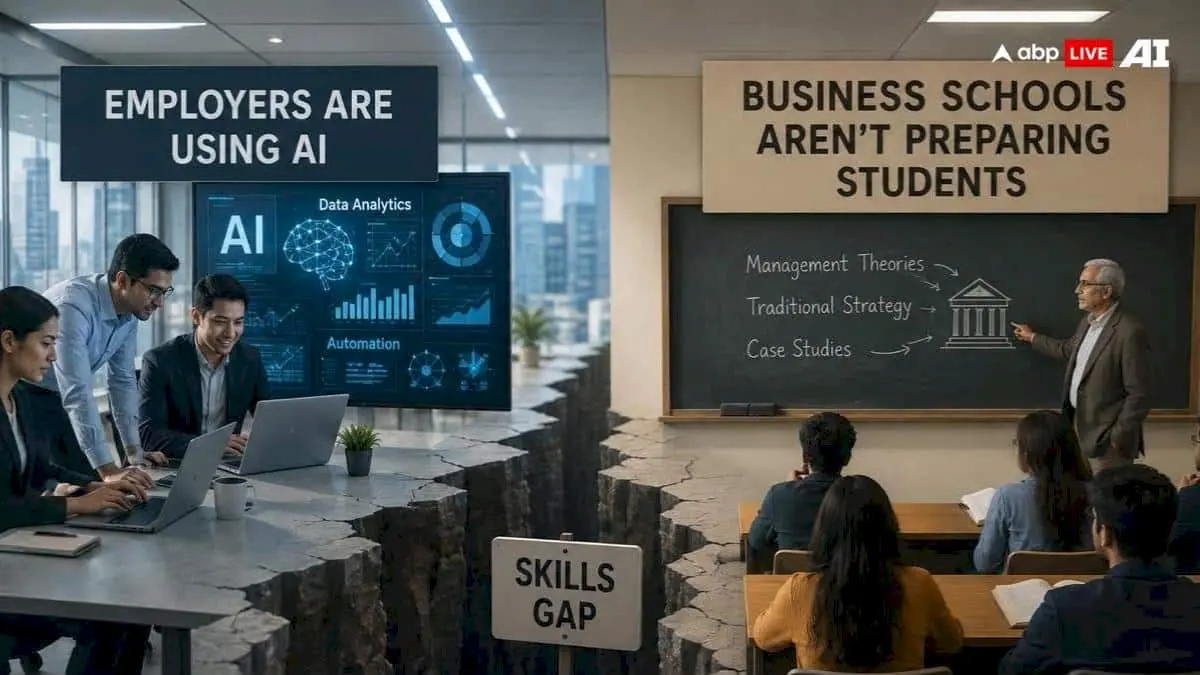
A survey of 647 employers by Drexel University's LeBow College of Business finds that communication, professionalism, teamwork, reliability and critical thinking are valued more than AI skills in recent graduates. The 2026…
The Story in Brief
A survey of 647 employers by Drexel University's LeBow College of Business finds that communication, professionalism, teamwork, reliability and critical thinking are valued more than AI skills in recent graduates. The 2026 Early-Career Skills Outlook, cited by news.abplive.com, shows that while AI tools are becoming routine in drafting emails, analysing data and generating forecasts, human judgment remains key. Entry-level roles that once served as apprenticeships are shifting: new hires now review AI outputs rather than creating first drafts themselves, reducing opportunities to develop judgment alongside experienced colleagues.

Dr. Mihirkant Upadhyaya, a senior supply chain manager at Intel, tells hindustantimes.com that AI raises the baseline of what people can produce but does not replace deep expertise. He says a degree's value lies in learning how to question and test knowledge, not just accumulate information. Both sources agree that business schools must teach students not only to use AI but also to recognise when to override its answers.
The Indian Opinion
The narrative that degrees are becoming irrelevant because AI can generate essays or code is exaggerated. Both the Drexel survey and the Intel manager underline that employers still prize human judgment, critical thinking and reliability, qualities developed through rigorous education. The real challenge is whether Indian business schools and universities will redesign curricula to build these skills, or continue prioritising rote learning. The test will come in placement outcomes: will graduates who can question AI outputs land better jobs than those who only know how to prompt it?
Sources (2): news.abplive.com, hindustantimes.com
This story was synthesised by AI from the 2 sources linked above.
Updated: this story now draws on 2 sources.