











Now Reading: Andhra’s Veligonda project gets Krishna water after 40-year wait
-
01
Andhra’s Veligonda project gets Krishna water after 40-year wait


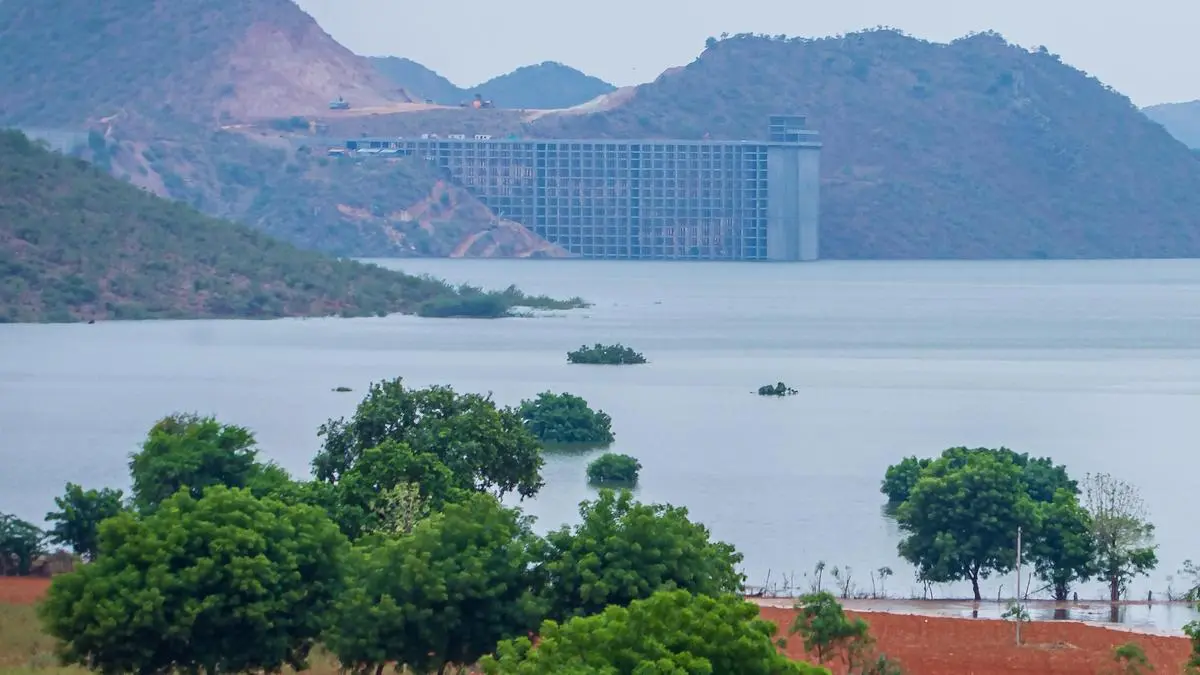
Chief Minister Nara Chandrababu Naidu released Krishna floodwater into the Nallamalasagar reservoir on August 31, 2026, reviving the Rs 10,790-crore Poola Subbaiah Veligonda Project after nearly four decades. The project will draw…
Chief Minister Nara Chandrababu Naidu released Krishna floodwater into the Nallamalasagar reservoir on August 31, 2026, reviving the Rs 10,790-crore Poola Subbaiah Veligonda Project after nearly four decades. The project will draw 43.50 TMC of water from Srisailam's foreshore through the Nallamala hills to irrigate 4,47,300 acres across four districts and supply drinking water to areas with groundwater fluoride ten times the permissible level. Stage I, serving 1,19,000 acres and four lakh people in Markapuram, is due for completion by June 2027.
Stage II covers the remaining 3,28,300 acres across Markapuram, Prakasam, Nellore, and Kadapa, with a March 2029 target. Of the total cost, Rs 7,607 crore has been spent. The government has shifted all 7,321 displaced families to seven rehabilitation colonies, with work completed in four and ongoing in three. The project spans 30 mandals across four districts, with the largest irrigation area in Markapuram constituency at 82,900 acres.
Indian Opinion Analysis
The Veligonda project has been in planning since the 1980s, stalled repeatedly by funding gaps, geological challenges in tunnelling through the Nallamala hills, and disputes over Krishna water sharing. Its revival now places it among India's largest intra-state irrigation schemes, comparable in scale to Telangana's Kaleshwaram project. The 43.50 TMC drawn from Srisailam foreshore relies on Krishna floodwaters, which are variable and shared with Telangana under the Krishna Tribunal awards. For the four lakh people in Markapuram getting Stage I drinking water, groundwater fluoride at ten times the WHO limit has caused skeletal fluorosis for decades. The government's next milestone is June 2027 for Stage I completion, while Stage II's March 2029 deadline hinges on Rs 3,183 crore in remaining funds and R&R of 7,321 families in seven colonies.
Source: thehindu.com
This brief was synthesised by AI from the source linked above.