










Now Reading: Book Examines Structural Failings in India’s District Courts
-
01
Book Examines Structural Failings in India’s District Courts


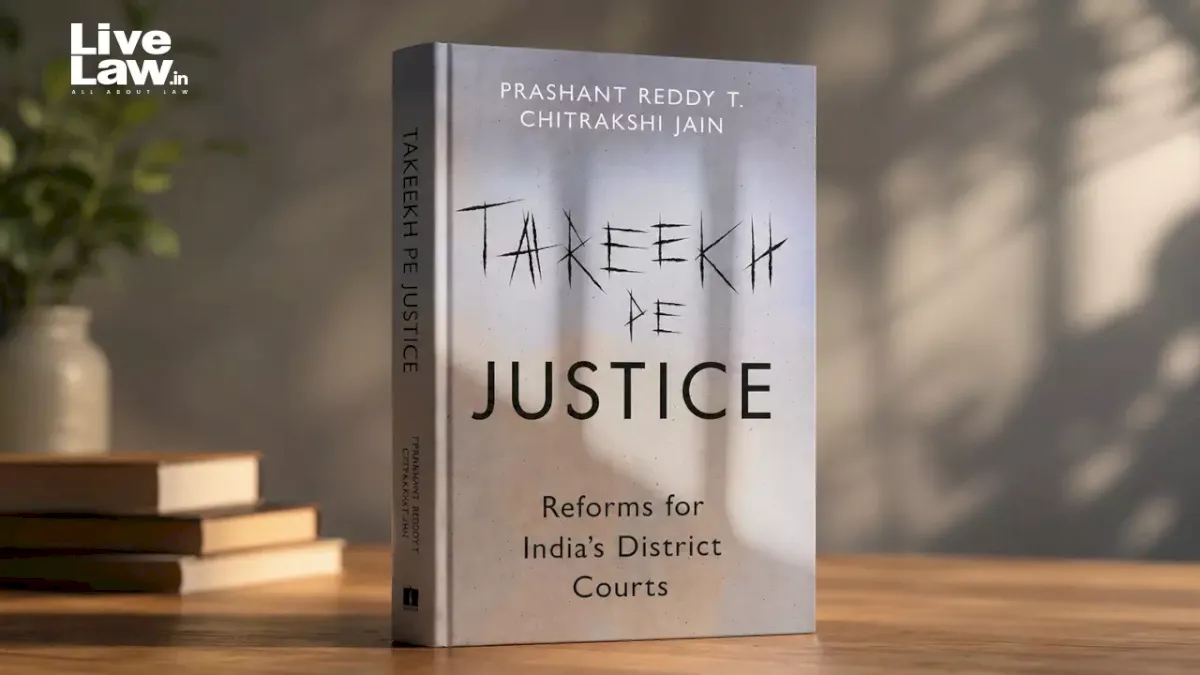
Tareekh Pe Justice: Reforms for India’s District Courts examines why delays and inefficiencies cannot be blamed only on shortages of money, staff and infrastructure. Reviewed by LiveLaw, the book by Prashant Reddy…
The Story in Brief
Tareekh Pe Justice: Reforms for India’s District Courts examines why delays and inefficiencies cannot be blamed only on shortages of money, staff and infrastructure. Reviewed by LiveLaw, the book by Prashant Reddy T and Chitrakshi Jain draws on judicial decisions, service rules, documented incidents, data and policy analysis.

Its first section studies the insecurity faced by district judges over probation, transfers, evaluations and disciplinary action. The authors argue that unclear standards, anonymous complaints and concentrated High Court supervision can weaken decisional independence. The book’s later sections examine statistics, budgets and bureaucracy before proposing long-term institutional reforms.
The Indian Opinion
The lazy narrative is that district courts need only more buildings, judges and technology. Those shortages matter, but this review points to a harder problem: administrative insecurity can shape how judges decide cases. The opposite exaggeration, that every disciplinary action is harassment, is equally unhelpful. The practical test is whether courts publish clear standards for evaluation and misconduct, and whether disciplinary decisions withstand independent scrutiny.
Source: livelaw.in
This story was synthesised by AI from the source linked above.