











Now Reading: Modi meets Xi, Putin at BRICS as Delhi declaration is adopted
-
01
Modi meets Xi, Putin at BRICS as Delhi declaration is adopted


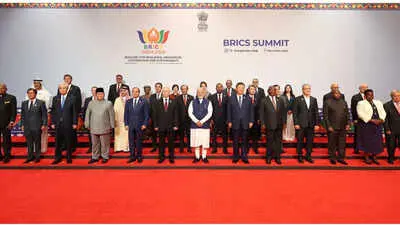
India hosted the 18th BRICS Summit in New Delhi on September 12-13, with all 11 member nations adopting the New Delhi Declaration by consensus despite sharp divisions between Iran and the UAE…
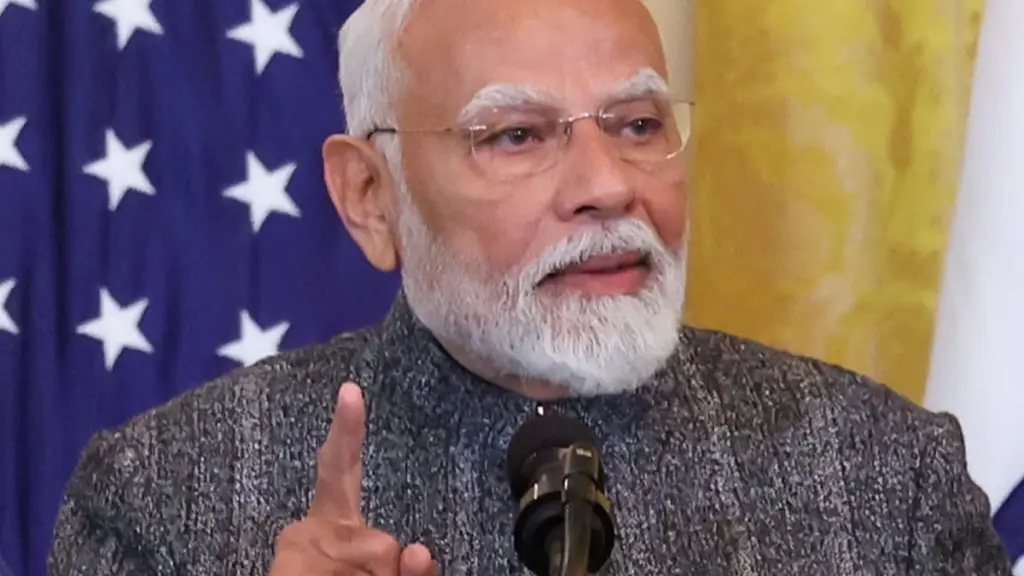
India hosted the 18th BRICS Summit in New Delhi on September 12-13, with all 11 member nations adopting the New Delhi Declaration by consensus despite sharp divisions between Iran and the UAE over the West Asia conflict. Prime Minister Narendra Modi held 15 formal bilateral meetings on the margins, including with Chinese President Xi Jinping, Russian President Vladimir Putin, and Iranian President Masoud Pezeshkian.
The Modi-Xi meeting signaled a cautious reset after the 2020 Galwan clash, with Modi making clear that border peace remained fundamental. Putin and Modi agreed to strengthen the India-Russia strategic partnership and discussed raising bilateral trade to USD 100 billion by 2030. The Kremlin said Modi and Xi offered diplomatic support to end the Ukraine war. China's Xi skipped the gala dinner, a decision not considered unusual by officials.
The declaration avoided naming countries responsible for the Iran war or the US tariff war, using generalised language that critics called a limitation of BRICS. Modi urged the grouping to translate its economic weight into measurable trade and investment targets, proposing to remove the bloc's top 10 trade barriers and create 1,000 new business partnerships annually. BRICS now represents nearly half the world's population and 40% of global GDP.
Indian Opinion Analysis
The Modi-Xi reset got top billing across coverage, but outlets framed very different things as the summit's headline. ThePrint's analysis pushed the northeast as the real test of that reset, arguing that the BRICS moment must be judged by future stability on the Arunachal border and the Brahmaputra, a framing absent from the wire-heavy summaries in Times of India and Livemint. Those instead led with the sheer number of bilaterals and the diplomatic feat of getting Iran and the UAE onto a single declaration, treating the summit as a self-contained Indian success. Hindustan Times carried Kapil Sibal's dissenting view that China gained most, a critical voice the other pro-government or neutral outlets did not surface.
Coverage: 18 sources, 5 pro-government, 3 government-critical, 10 neutral
Sources (18): theprint.in (government critical), asia.nikkei.com (neutral report), asia.nikkei.com (2) (neutral report), timesofindia.indiatimes.com (pro government), timesofindia.indiatimes.com (2) (neutral report), timesofindia.indiatimes.com (3) (pro government), timesofindia.indiatimes.com (4) (neutral report), timesnownews.com (neutral report), timesnownews.com (2) (pro government), theprint.in (2) (pro government), theprint.in (3) (pro government), moneycontrol.com (neutral report), aljazeera.com (government critical), amp.scmp.com (neutral report), hindustantimes.com (government critical), livemint.com (neutral report), livemint.com (2) (neutral report), livemint.com (3) (neutral report)
This brief was synthesised by AI from the 18 sources linked above, so one read covers every framing they carry.
Updated: this story now draws on 18 sources.