












Now Reading: Centre revises Ladakh hill council rules, allows 7-24 elected seats
-
01
Centre revises Ladakh hill council rules, allows 7-24 elected seats



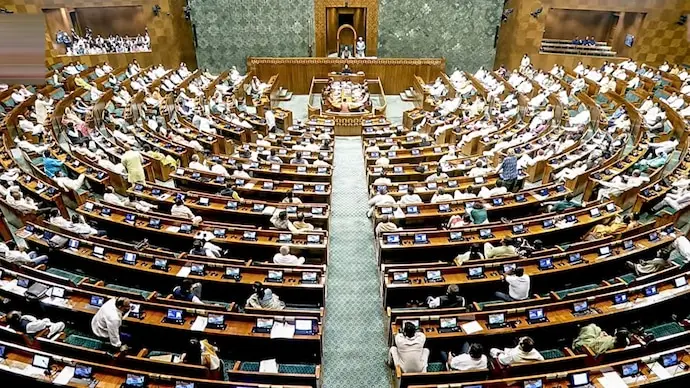
The Centre has amended the legal terminology, administrative structure and electoral provisions governing the Autonomous Hill Development Councils in Ladakh to align them with the Jammu and Kashmir Reorganisation Act, 2019. The Ladakh Autonomous Hill Development Councils (Amendment) Regulation allows the Ladakh administration to determine the number of elected seats in each council, with a minimum of seven and a maximum of 24 seats.
The administration can nominate up to four members from among women and unrepresented communities, subject to the one-sixth limit of the population. The sitting Lok Sabha MP representing Ladakh will be an ex-officio member of the councils. Each council will have a five-year term from the date of its first meeting, unless dissolved earlier, and the term can be extended if holding elections is considered impracticable. The regulation also replaces references to ‘State’ and ‘Governor’ with ‘Union territory of Ladakh’ and ‘Administrator’.
Indian Opinion Analysis
All three outlets, Orissa Post, Business Standard and Times Now, carried identical wire copy from the Press Trust of India, offering no divergent framing or editorial stance. The coverage is uniform straight reporting of the regulation's key provisions: the 7-24 seat range, the nomination power, the ex-officio MP seat, the five-year term and the terminology update. No outlet led with a political angle, omitted a detail or added commentary. The regulation's practical impact will turn on how the Ladakh administration exercises its discretion to set seat numbers within the given range and to nominate members, decisions that will determine the councils' representative character.
Coverage: 3 sources, 3 neutral
Sources (3): orissapost.com (neutral report), business-standard.com (neutral report), timesnownews.com (neutral report)
This brief was synthesised by AI from the 3 sources linked above, so one read covers every framing they carry. Methodology and corrections.