

















Now Reading: China treads tightrope between India, Pakistan after truce
-
01
China treads tightrope between India, Pakistan after truce


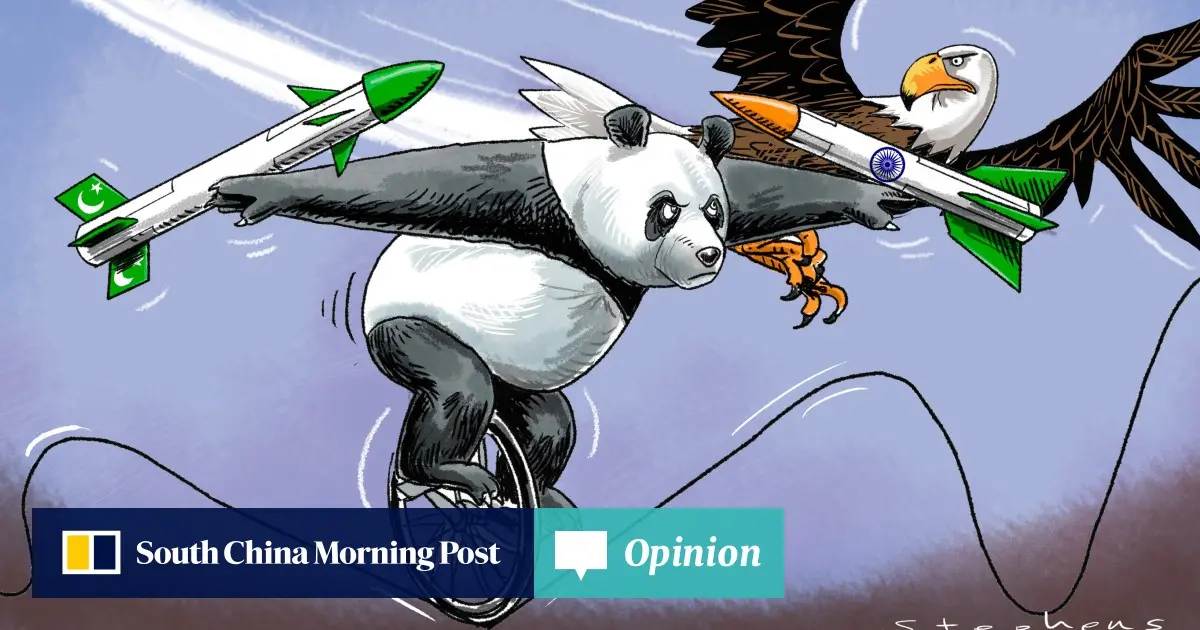
India and Pakistan have agreed a ceasefire after trading accusations of cross-border strikes and civilian casualties, but the risk of renewed escalation remains high, with implications for regional stability. US President Donald Trump claimed credit for the truce, but an opinion piece in the South China Morning Post argues that China's restrained diplomacy reflects a strategic priority for de-escalation over opportunism, as a prolonged conflict threatens Beijing's geopolitical and economic interests in South Asia.

The latest military exchange included artillery fire and air strikes. Pakistan said it shot down five Indian warplanes, including three Rafale fighter jets, using Chinese-made J-10C fighters. If true, it highlights a regional arms race. Chinese social media cheered Pakistan's tactical gains, but Beijing's foreign ministry urged calm and restraint, recognising that instability on its border with India could harm China's own security.
The ceasefire does not resolve a brewing crisis over water: India suspended the Indus Waters Treaty on April 23, cutting off hydrological data and flood warnings to Pakistan. Pakistan relies on the Indus system for about 80 per cent of its agriculture. The opinion piece warns this "hydrological warfare" could put civilians at risk and destabilise the region further. China's balancing act is complicated by its partnership with India on issues such as BRICS and the Ukraine war.
Indian Opinion Analysis
The Indus Waters Treaty has survived two wars and decades of tension, making India's suspension a historic rupture. The treaty gives India rights to the eastern rivers (Ravi, Beas, Sutlej) and Pakistan the western ones (Indus, Jhelum, Chenab), with data-sharing a key confidence-building measure. Cutting off flood warnings directly threatens 120 million people in Pakistan's Punjab and Sindh provinces. China, as an upper riparian on the Indus headwaters, holds silent leverage: any dam or diversion upstream affects both nations. The real question is whether this suspension becomes a permanent weaponisation of water, or whether third-party mediation, possibly by the World Bank which brokered the original pact, can revive it.
Source: scmp.com
This story was synthesised by AI from the source linked above. Methodology and corrections.