














Now Reading: China’s 1.4 billion barrel oil stockpile reshapes global market
-
01
China’s 1.4 billion barrel oil stockpile reshapes global market



China has amassed up to 1.4 billion barrels of crude in strategic and enterprise inventories, a RAND study finds, more than three times the US government's strategic reserve. Beijing can now act…
The Story in Brief
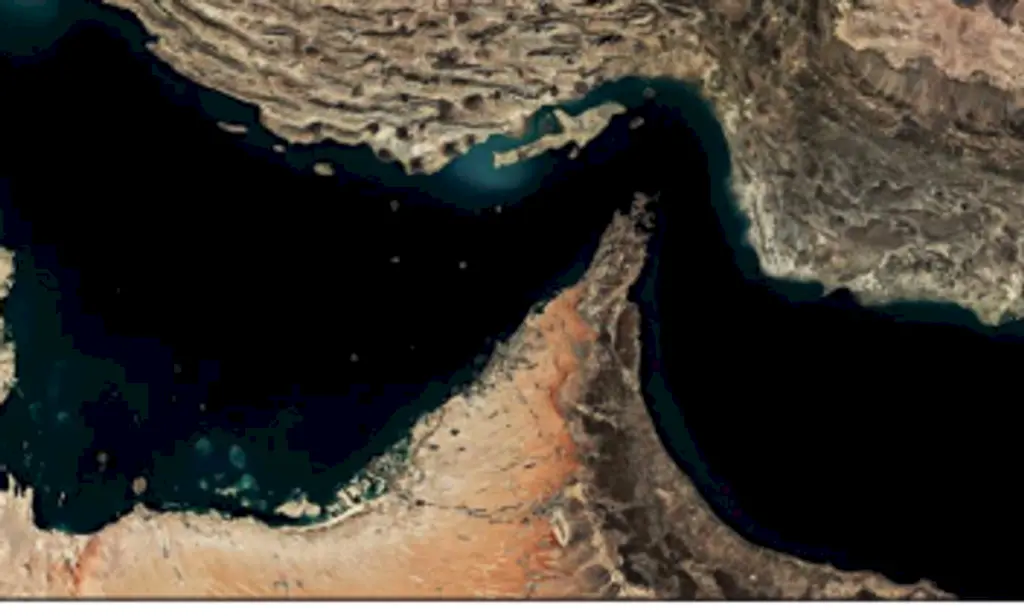
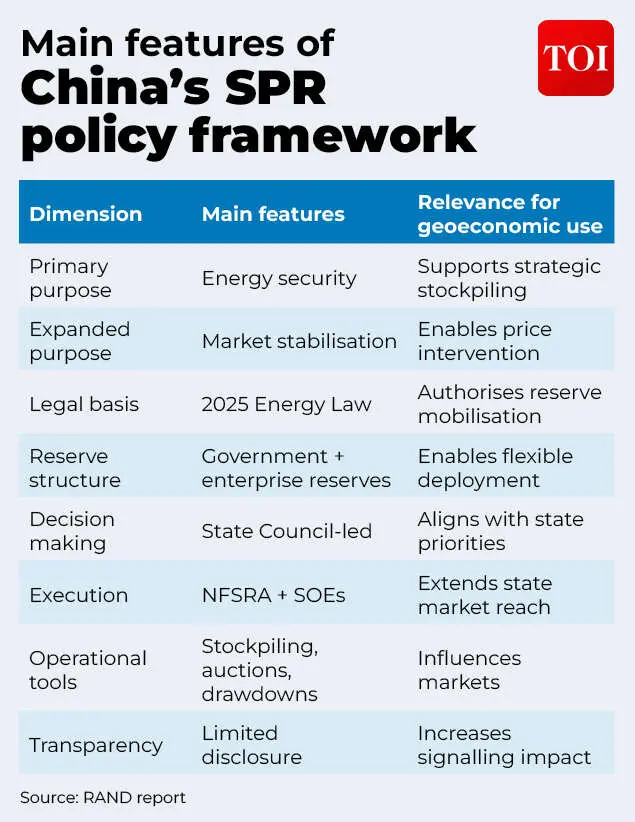
China has amassed up to 1.4 billion barrels of crude in strategic and enterprise inventories, a RAND study finds, more than three times the US government's strategic reserve. Beijing can now act as the world's swing buyer: stockpiling when prices dip and releasing supplies during rallies, as seen in the current Hormuz crisis when it reduced imports to mute price spikes.
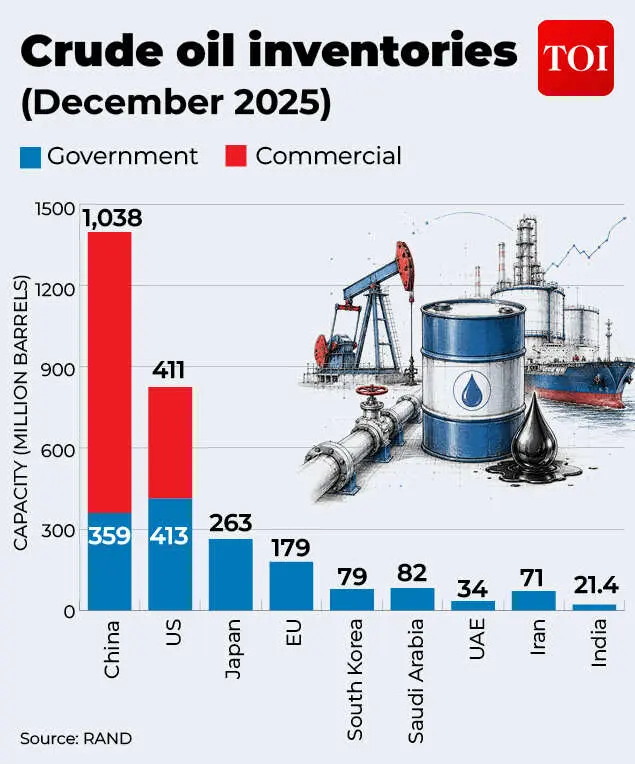
This gives China price-making power that rivals traditional producers, notes Manas Majumdar of PwC India. Nearly 22% of its 2025 reported imports involved sanctioned oil from Iran and Venezuela, often rerouted via Malaysia. For India, which imports roughly half China's volume, this new centre of oil market influence demands a strategic rethink.
The Indian Opinion
The usual narrative pits OPEC and the US as sole oil price setters. That misses how China's opaque, commercially-driven reserve management now gives it swing-buyer power. India, the world's third-largest importer, cannot ignore this. The real test is whether New Delhi will build a similar strategic buffer or diversify supplier relationships fast enough to counter Beijing's leverage during a crisis. No platitude will fix that.
Source: timesofindia.indiatimes.com
This story was synthesised by AI from the source linked above.