


















Now Reading: Climate Trends report estimates Rs 2,661 crore lost to heat stress on milk
-
01
Climate Trends report estimates Rs 2,661 crore lost to heat stress on milk

Climate Trends report estimates Rs 2,661 crore lost to heat stress on milk

The Story in Brief
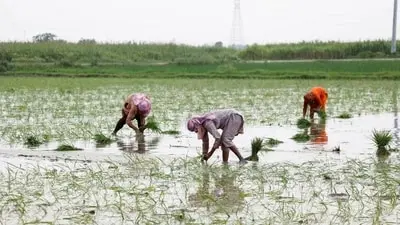
Climate change is already cutting into India's food supply, disrupting farm-to-market systems and driving up food prices, with losses running into billions of dollars a year, according to a report published on Wednesday, 4 November 2026. The report, titled ‘From Risk to Resilience: Climate Change, Ecology and the Future of Indian Agriculture’, was published by Climate Trends, a Delhi-based climate research organisation. It estimates that heat stress alone costs India Rs 2,661 crore annually in lost milk production, equivalent to about 1.8 million tonnes of milk, or 2 per cent of national output.
The report says 40 per cent of India's livestock is vulnerable to extreme weather events, and 45 per cent of crop-producing land faces significant flood risk. Over the past five decades, a 1 degree Celsius rise has cut national average all-crop yields by about 8 per cent. Hindustan Times adds that wheat production could fall by 23% by 2050 and fish catches by 10 to 17% under climate scenarios. Dr Palak Balyan, research lead at Climate Trends, said India's food losses are ‘a systems problem’ needing investment in storage, extension services and market access. The report recommends moving beyond yield-centric approaches toward restoring soil health and diversifying cropping systems.
Update, 5 November 2026: Nagaland Post now also carries the PTI wire version of the Climate Trends report, confirming the same figures: heat stress costs Rs 2,661 crore annually in lost milk production, 40 per cent of livestock is vulnerable to extreme weather, and a 1 degree rise has cut yields by about 8 per cent. No new fact or comment is added beyond the earlier PTI text.
Indian Opinion Analysis
The five sources all carry PTI wire copy with near-identical facts and quotes, making the coverage uniform. ThePrint, Deccan Chronicle, Orissa Post and Nagaland Post run the PTI text verbatim, while Hindustan Times adds specific projections from the report such as a 23% wheat decline by 2050 and a 10 to 17% fish catch fall, and includes the Azadpur Mandi mango example. No source offers government or opposition comment, so there is no pro-government or critical framing to contrast. The story is straight news reporting of a report launch. The key next step is the policy pathway the report recommends: stronger institutional frameworks and accessible adaptation finance for smallholders, though no government response or deadline is named.
Coverage: 2 sources, 2 neutral
Sources (2): PTI (carried by theprint.in, deccanchronicle.com, orissapost.com, nagalandpost.com), hindustantimes.com (neutral report)
This brief was synthesised by AI from the 2 sources linked above, so one read covers every framing they carry. Methodology and corrections.