

















Now Reading: India’s irrigation expansion built food security but drained aquifers
-
01
India’s irrigation expansion built food security but drained aquifers


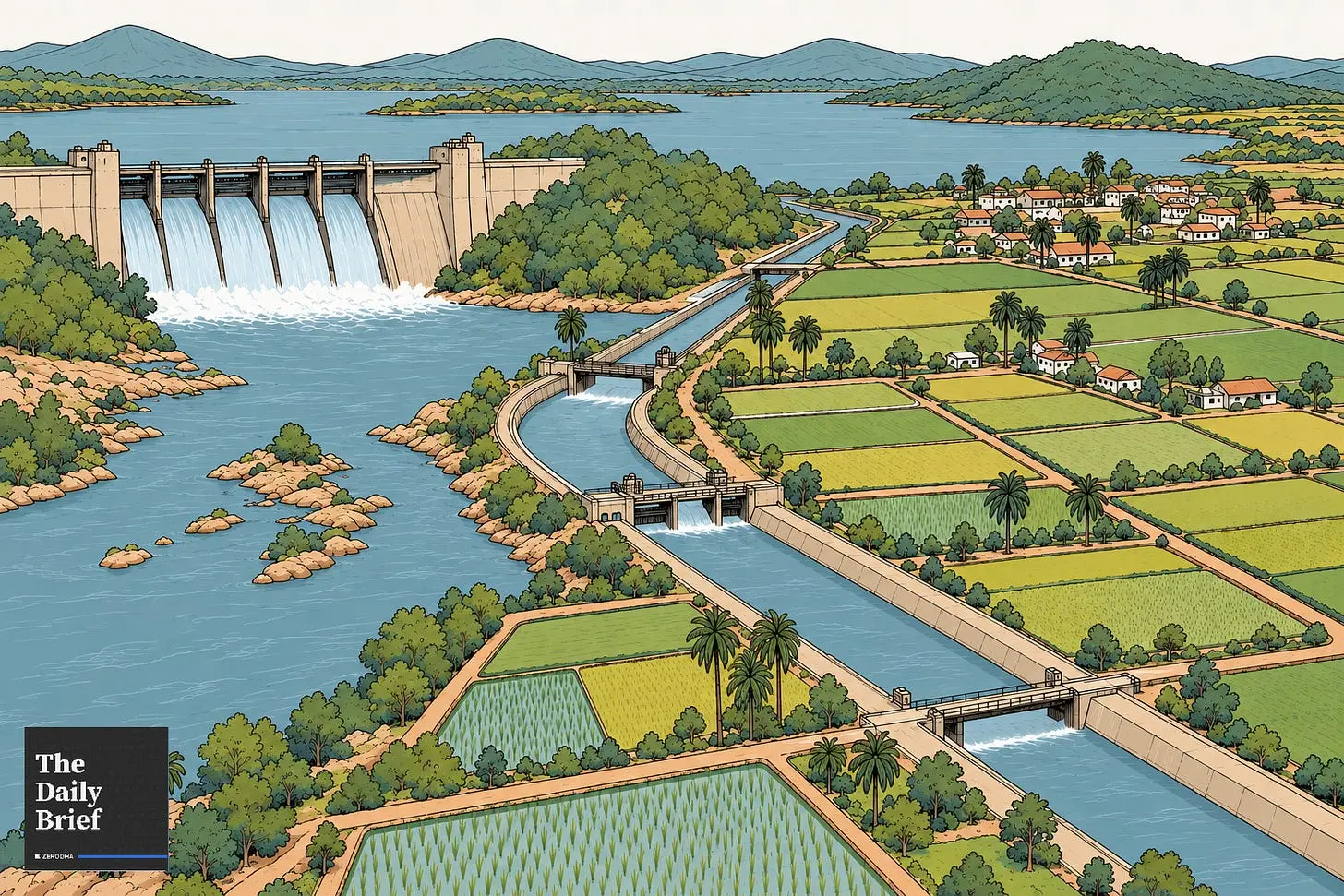
India's share of irrigated farmland rose from about 21% in 1965 to 53% by 2015, insulating foodgrain production from monsoon shocks. In 1965 an 18% rainfall deficit wiped out 19% of foodgrain…
India's share of irrigated farmland rose from about 21% in 1965 to 53% by 2015, insulating foodgrain production from monsoon shocks. In 1965 an 18% rainfall deficit wiped out 19% of foodgrain output, a comparable deficit in 2015 cut just 0.2%, according to The Daily Brief. But the expansion created severe tradeoffs.
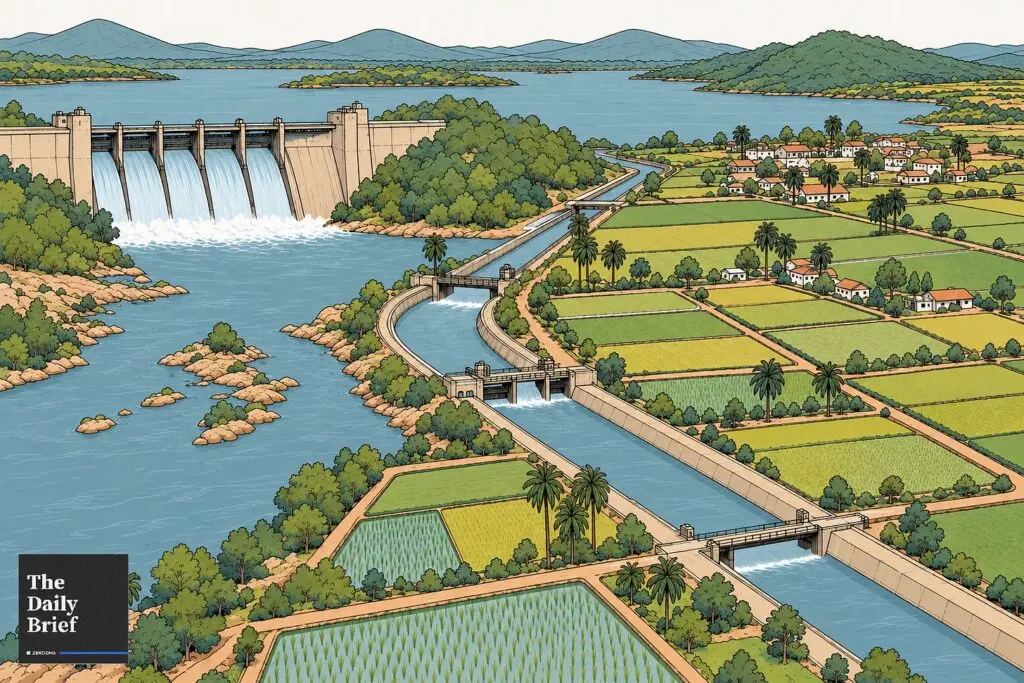
Early dam projects left a widening gap between created and utilised irrigation potential, driving a mass shift to tubewells that made India the world's largest groundwater extractor, using more than the US and China combined. Subsidised power fuels aquifer over-extraction and drains state utilities. Around 11% of groundwater assessment units are over-exploited. The report is the first of two parts, the next will cover companies working in irrigation.
Indian Opinion Analysis
This is uniform straight reporting from a single author across two platforms. The story traces India's irrigation history without a partisan frame. The implied critique is that post-Independence dam-building created a utilisation gap that later drove unconstrained tubewell extraction, subsidised power, and aquifer stress. No source takes a pro- or anti-government stance, the piece reports tradeoffs as engineering and policy facts. The key implication is that India's food security resilience against monsoon shocks came at a measurable environmental cost. Part two, which will cover companies in the irrigation industry, is the item to watch.
Coverage: 2 sources, 2 neutral
Sources (2): thedailybrief.zerodha.com (neutral report), linkedin.com (neutral report)
This brief was synthesised by AI from the 2 sources linked above, so one read covers every framing they carry.