






















Now Reading: Delhi AQI hits 383, GRAP-3 restrictions imposed
-
01
Delhi AQI hits 383, GRAP-3 restrictions imposed


The Story in Brief
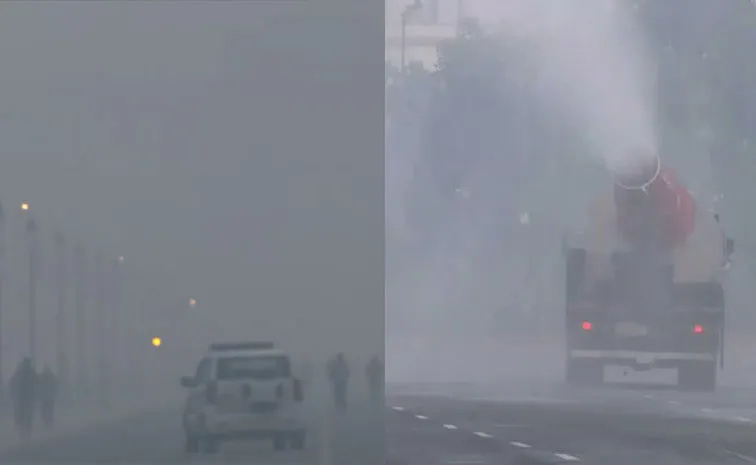
Delhi’s air quality index (AQI) reached 383 on Sunday, 8 November, placing the city in the ‘very poor’ category, as per the Central Pollution Control Board (CPCB). Some areas recorded even higher levels, with Jahangirpuri at 450 and RK Puram at 448. Of the city’s 54 monitoring stations, 24 reported ‘severe’ AQI readings.
The Commission for Air Quality Management (CAQM) has enforced GRAP-3 restrictions across Delhi-NCR. Non-essential construction and demolition have been halted, along with road building, earthwork and stone crushing. BS-3 petrol and BS-4 diesel four-wheelers face curbs in designated zones. These measures are in addition to ongoing GRAP-1 and GRAP-2 rules.
The early warning system has forecast that severe pollution levels will persist on 8 and 9 November. Vehicle emissions account for an estimated 21.4% of the total pollution, with Diwali firecracker use expected to worsen air quality further.
Indian Opinion Analysis
Delhi residents are breathing the worst air of the season just as Diwali festivities peak. The GRAP-3 clampdown bans construction and restricts older vehicles, but these measures cannot control the seasonal cocktail of low wind speed, stubble burning from neighbouring states and firecracker smoke. The CPCB data shows 24 of 54 monitoring stations already in the ‘severe’ zone, a level that triggers health emergencies for vulnerable groups. With the early warning system predicting no let-up on 8 and 9 November, the city is on course for a multi-day severe episode unless wind patterns shift or compliance with restrictions improves.
Source: sakshi.com
This brief was synthesised by AI from the source linked above. Methodology and corrections.