














Now Reading: Direct mutual fund plans cheaper but investors exit faster, data shows
-
01
Direct mutual fund plans cheaper but investors exit faster, data shows

Direct mutual fund plans cheaper but investors exit faster, data shows


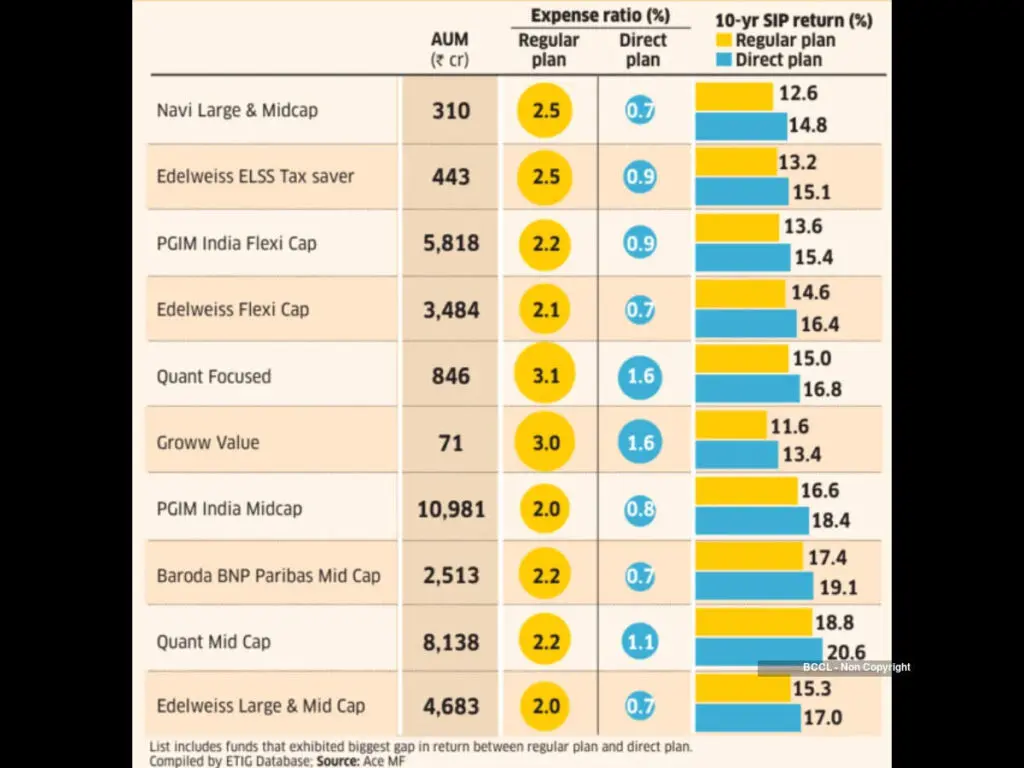
Direct mutual fund plans, launched in 2013, let investors buy without a distributor and save up to 1% in annual expense ratios. Over 10 years, a Rs 10,000 monthly SIP in the…
The Story in Brief
Direct mutual fund plans, launched in 2013, let investors buy without a distributor and save up to 1% in annual expense ratios. Over 10 years, a Rs 10,000 monthly SIP in the direct plan of an average equity fund would have grown to Rs 27.42 lakh versus Rs 25.58 lakh in the regular plan, a gap of Rs 2.03 lakh.
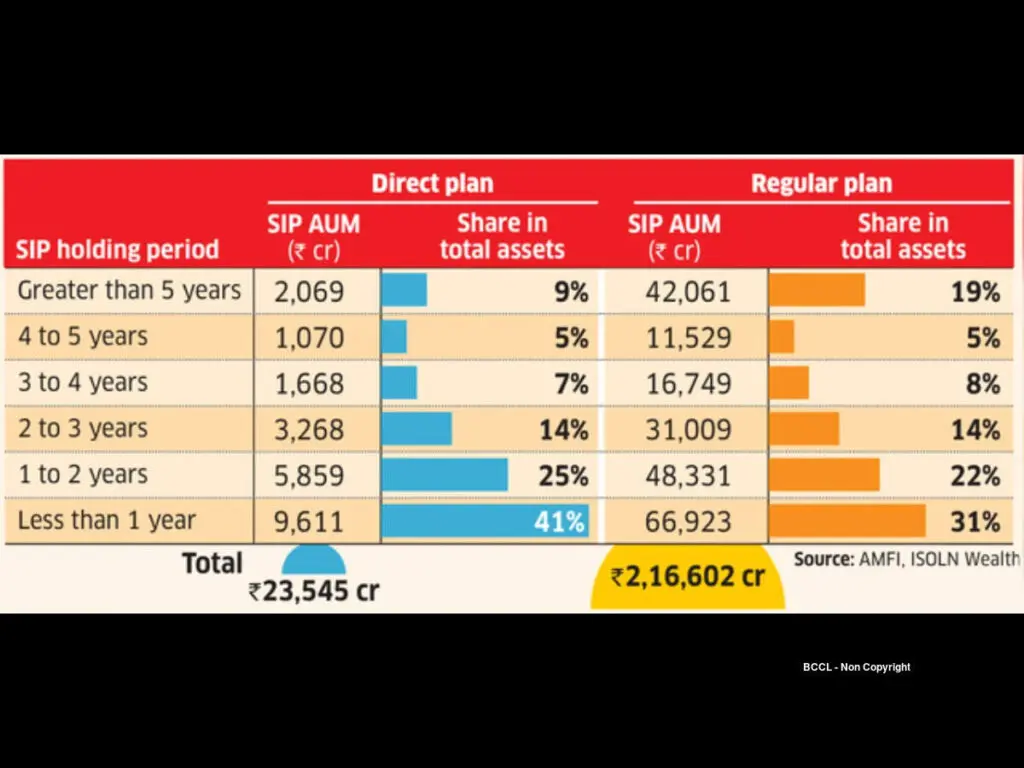
But this cost advantage comes with behavioural risks. AMFI data shows 41% of direct-plan assets are redeemed within the first year, and only 20% stay invested for over three years, compared with 32% for regular plans. Experts quoted by Economic Times say the invisible cost of panic exits and wrong decisions often outweighs the savings from lower fees. Separately, Capitalmind Mutual Fund reported that 84% of its AUM is in direct plans, with 36% of individual investors from smaller towns, indicating growing reach beyond top cities.
The Indian Opinion
The narrative that direct plans are always better ignores a harsh fact: most DIY investors lack the discipline to stay put. The real test is not the expense ratio difference, it is the behaviour gap. Advisers who earn commissions often earn them by preventing panic exits. The question investors must ask themselves is not 'Can I save 1%?' but 'Will I hold on when the market drops 20%?'
Sources (2): economictimes.indiatimes.com, businesstoday.in
This story was synthesised by AI from the 2 sources linked above.
Updated: this story now draws on 2 sources.