




















Now Reading: Equal pay not automatic, employee must prove discrimination
-
01
Equal pay not automatic, employee must prove discrimination



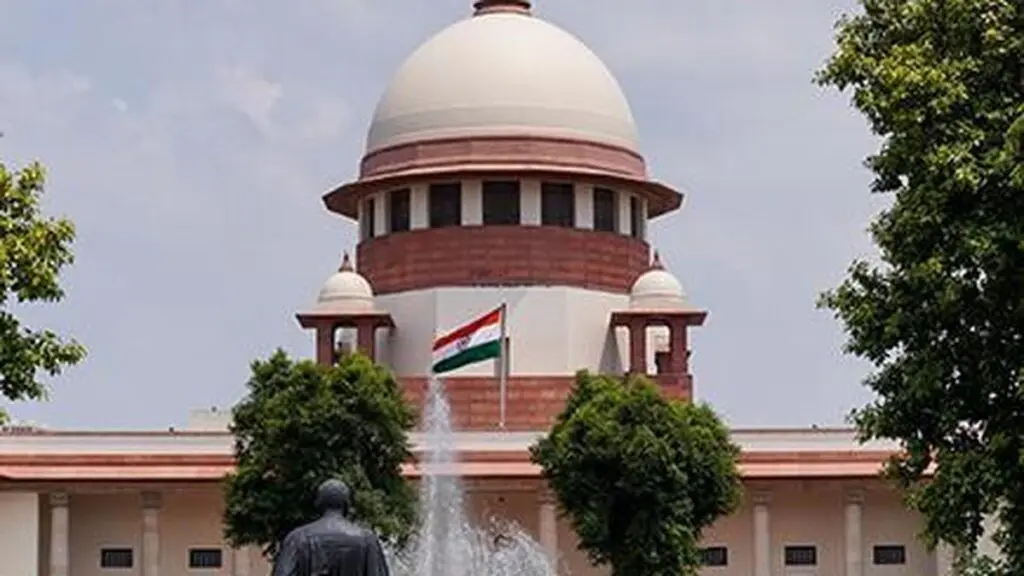
The right to equal pay for equal work, now a fundamental right under Articles 14 and 16 of the Constitution, is not automatically applicable. An employee seeking parity must actively plead and prove discrimination, similarity of posts, and the absence of any rational basis for the differential treatment, according to settled Supreme Court law analysed on LivLaw.

Courts assess parity on ten primary criteria including the nature of the post, method of recruitment, qualifications, hierarchy in the cadre and the employer's capacity to pay, along with ten secondary factors such as skills, experience, risk and mental requirements. The constitutional courts have laid down a four-factor test for equivalence of posts: nature and duties, responsibilities and powers, qualifications and salary. All four factors must be satisfied.
Even if an employee establishes discrimination, a valid classification based on intelligible differentia with a rational nexus to the policy objective will pass constitutional muster. Courts will not sit in appeal over policy decisions made after consultation with expert committees unless the classification is inherently arbitrary. The burden of proof rests squarely on the employee.
Indian Opinion Analysis
The Supreme Court's equal-pay jurisprudence has evolved from a directive principle to a fundamental right, yet the burden of proof remains heavy on the employee, not the employer. This matters because government payrolls in India are the largest in the world, covering over 1.7 crore central and state employees, and parity claims can imply a multi-crore rupee liability for a single cadre. The four-factor equivalence test, nature of duties, responsibilities, qualifications and salary, is the same test the Seventh Pay Commission used to recommend pay bands in 2016, and which the Rajasthan High Court recently applied while dismissing a parity petition of 5,000 contractual teachers against regular teachers. The realistic outcome of a typical parity petition is low success: petitioners win only when they can show identical recruitment rules and identical duties, not merely similar job titles. Watch for the next Seventh Pay Commission report, due by end-2025, which may re-examine classification of posts across central ministries.
Source: livelaw.in
This story was synthesised by AI from the source linked above. Methodology and corrections.