











Now Reading: Full Vande Mataram now a punishable insult as Parliament passes Bill
-
01
Full Vande Mataram now a punishable insult as Parliament passes Bill


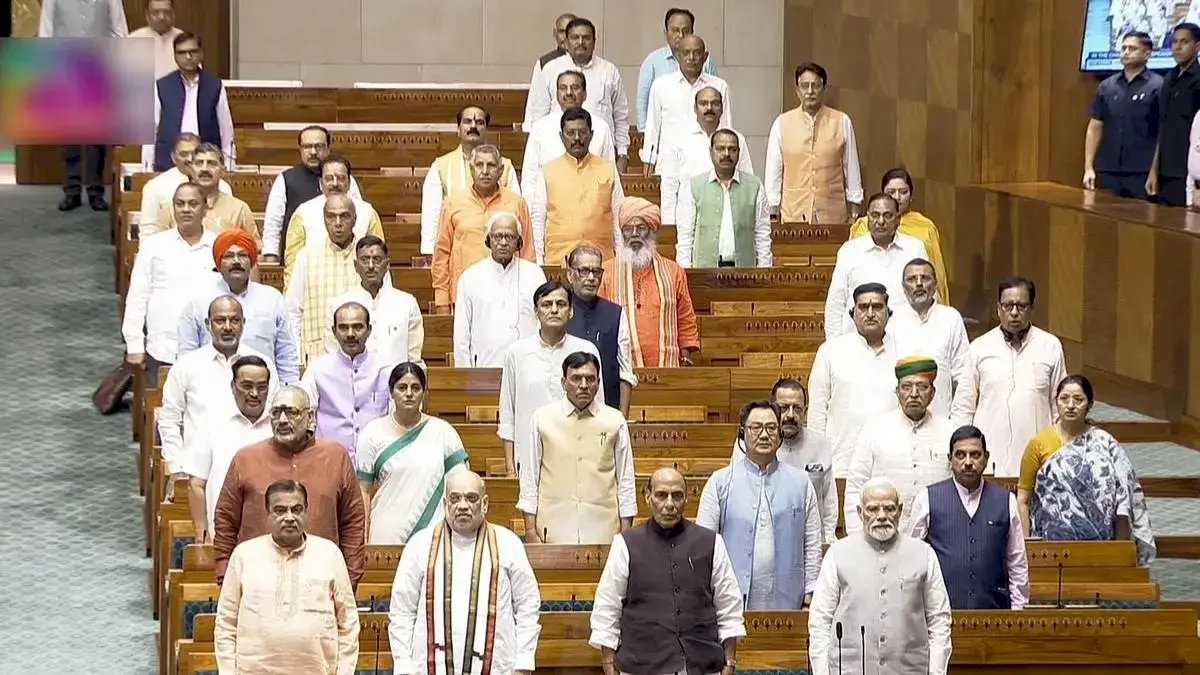
President Droupadi Murmu has given assent to the Prevention of Insults to National Honour (Amendment) Bill, 2026, granting the full six-stanza version of Vande Mataram the same legal protection as the national…
The Story in Brief
President Droupadi Murmu has given assent to the Prevention of Insults to National Honour (Amendment) Bill, 2026, granting the full six-stanza version of Vande Mataram the same legal protection as the national anthem. Intentionally disrupting its singing is now a criminal offence, punishable with up to three years in prison. The full song was played before and after her Independence Day eve address, and will be sung from the Red Fort ramparts for the first time on the 80th Independence Day.

The government had launched a year-long celebration of the song's 150th anniversary in November 2025. Frontline reports that the Bill's passage overrides a 1950 Constituent Assembly decision to adopt only the first two stanzas as the national song, a compromise endorsed by Mahatma Gandhi and Rabindranath Tagore who objected to later stanzas that invoke a Hindu deity.
The Indian Opinion
The government frames this as restoring national honour, but it steamrolls a careful pluralist compromise that Gandhi, Tagore, Nehru and Bose all accepted 76 years ago. No opposition voices were reported as shaping the final law. The real test is whether the amended law will be used selectively against dissenters or applied evenly. Watch for the first prosecution and which community the accused belongs to: that number will tell us if this is about national honour or majoritarian muscle.
Sources (3): frontline.thehindu.com, indiatoday.in, thefederal.com
This story was synthesised by AI from the 3 sources linked above.
Updated: this story now draws on 3 sources.