














Now Reading: Glacier retreat creates new island in Alaska’s Alsek Lake
-
01
Glacier retreat creates new island in Alaska’s Alsek Lake



A new island has emerged in Alaska after the Alsek Glacier separated from a rocky landform called Prow Knob, NASA satellite data shows. The break occurred between 13 July and 6 August…
The Story in Brief
A new island has emerged in Alaska after the Alsek Glacier separated from a rocky landform called Prow Knob, NASA satellite data shows. The break occurred between 13 July and 6 August 2025, turning the former ice-surrounded nunatak into an island covering about five square kilometres.
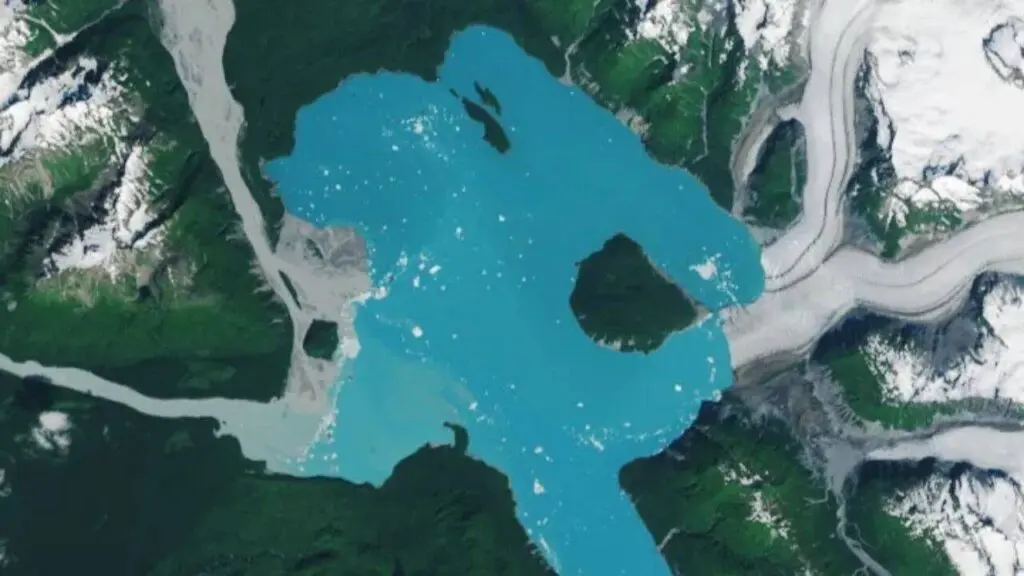
The glacier’s retreat has also expanded Alsek Lake from 45 square kilometres in 1984 to 75 square kilometres in 2025. Both main arms of the Alsek Glacier have pulled back more than five kilometres. NASA records show that Prow Knob, photographed by glaciologist Austin Post in 1960, remained attached to the glacier for decades. The US National Park Service warns that continued ice loss could eventually alter the Alsek River’s course.
The Indian Opinion
Calling Prow Knob’s emergence a sudden new island obscures the longer process behind it. The evidence points to decades of glacier retreat, not one dramatic event, while claims that a single landform proves every local consequence of climate change go too far. The stronger measure is the record: Alsek Lake grew by 30 square kilometres and the glacier retreated over five kilometres since 1984. Future satellite readings and the river’s course will test how fast the change continues.
Source: timesofindia.indiatimes.com
This story was synthesised by AI from the source linked above.