
















Now Reading: Grocery spend down 8%, rent up 21% in 2026: study
-
01
Grocery spend down 8%, rent up 21% in 2026: study


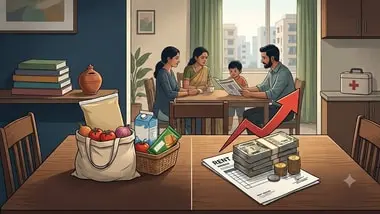
Household spending on groceries fell 8% in 2026 from 2025, while rent rose 21%, according to The Great Indian Wallet 4.0 2026 study by Home Credit India. Groceries remain the biggest monthly expense at Rs 8,505, accounting for 25% of the wallet. Rent at Rs 6,965 now makes up 21% of essential spending.
The study surveyed individuals aged 18 to 55 with an average monthly income of Rs 35,000. It found that 61% of households did not change their spending or saving behaviour despite lower prices. Among the 39% who did, 12% saved more, 12% spent more on food quality, 9% increased education spending, and 7% spent more on health.
GST 2.0 brought the strongest perceived price relief in two-wheelers (26%) and cars (25%), followed by smartphones and home appliances at 22% each. The study suggests households are using the extra headroom cautiously for savings and essentials rather than discretionary spending.
Indian Opinion Analysis
GST 2.0 took effect in July 2025, merging multiple tax slabs into a simpler structure. The Reserve Bank of India has noted that lower tax rates can boost consumption, but the study shows households prioritising savings and quality over volume. The contrast between falling grocery bills and rising rents reflects a structural shift: housing costs are driven by urban migration and limited supply, which tax policy does not directly address. The next quarterly CPI data release will show whether the trend holds across income groups.
Source: livemint.com
This brief was synthesised by AI from the source linked above. Methodology and corrections.