











Now Reading: Haryana health minister seeks greater adoption of AYUSH
-
01
Haryana health minister seeks greater adoption of AYUSH



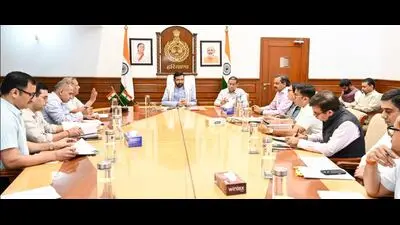
Haryana Health Minister Arti Singh Rao called for greater adoption of AYUSH systems, Ayurveda, Yoga, naturopathy, Unani, Siddha and homoeopathy, citing their role in managing chronic lifestyle diseases. Speaking from a statement…
The Story in Brief
Haryana Health Minister Arti Singh Rao called for greater adoption of AYUSH systems, Ayurveda, Yoga, naturopathy, Unani, Siddha and homoeopathy, citing their role in managing chronic lifestyle diseases. Speaking from a statement on Wednesday, she noted rising global interest in traditional medicine. The state recently ran the Rashtriya Poshan Maah/Seva Pakhwada campaign, organising 1,771 AYUSH health camps that gave free check-ups to over 10,900 people.
Rao highlighted Haryana’s AYUSH infrastructure: four major Ayurvedic hospitals, one Unani and one homoeopathic hospital, plus 515 Ayurvedic, 16 Unani and 24 homoeopathic dispensaries. Under the National AYUSH Mission, 21 wings in district hospitals, 102 inpatient departments in community health centres and 106 outpatient departments in primary health centres are operational, mostly in rural areas. The state also runs Shri Krishna AYUSH University and 13 Ayurvedic colleges.
The Indian Opinion
The minister’s appeal for wider AYUSH adoption sounds reasonable, but the claim that these systems help manage chronic diseases needs more than rhetoric. While historical use is undeniable, hard evidence on outcomes for conditions like diabetes or hypertension remains thin. The government’s 1,771 camps and 10,900 consultations are a start, but numbers alone do not prove efficacy. A concrete test: will Haryana publish follow-up data on patients’ health improvements from those camps? Until then, the push risks being a faith-based policy rather than a science-based one.
Source: hindustantimes.com
This story was synthesised by AI from the source linked above.