















Now Reading: IACS marks 150 years of Indian scientific ambition
-
01
IACS marks 150 years of Indian scientific ambition


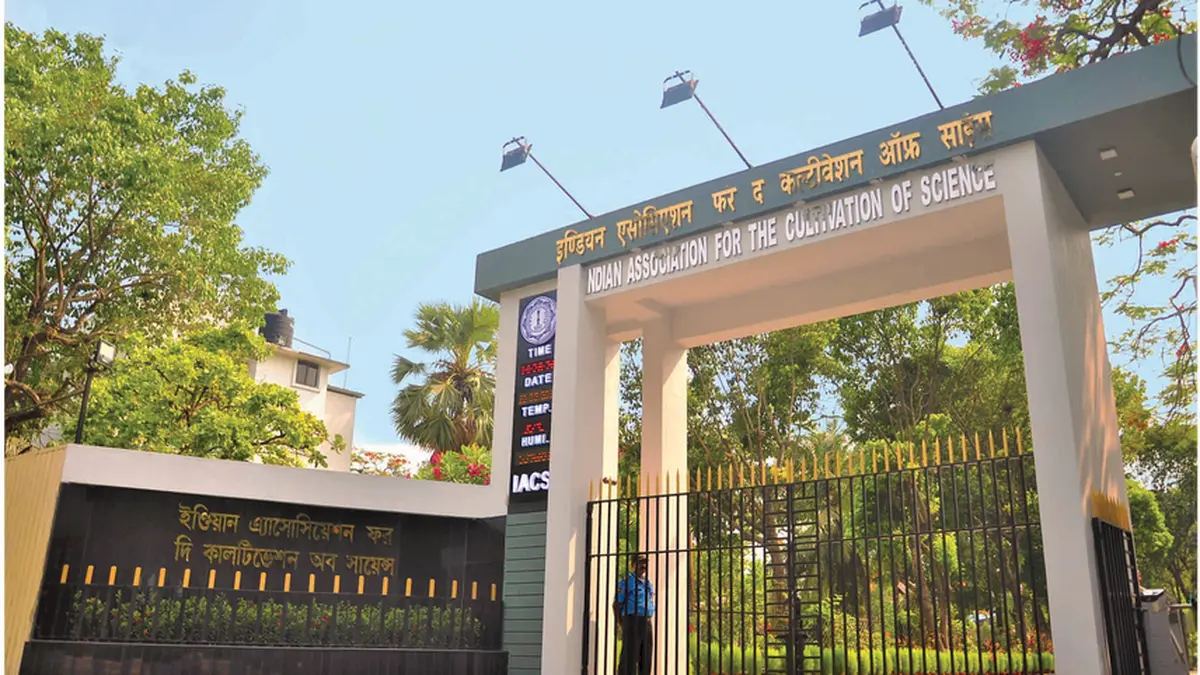
The Indian Association for the Cultivation of Science, founded in Calcutta on July 29, 1876, is marking 150 years of scientific work by Indians. Physician Mahendralal Sircar proposed the institution in 1869,…
The Story in Brief
The Indian Association for the Cultivation of Science, founded in Calcutta on July 29, 1876, is marking 150 years of scientific work by Indians. Physician Mahendralal Sircar proposed the institution in 1869, arguing that education in physical sciences was vital to India’s progress and scientific self-reliance. He also criticised the colonial government’s lack of support for Indian research.
The IACS became closely linked to C.V. Raman, who used its laboratories while working as a government officer. There, he conducted the experiments that led to his discovery of the Raman effect in 1928. The work won him the 1930 Nobel Prize in Physics, making him the first Asian scientist to win a Nobel in the sciences, The Hindu reports.
The Indian Opinion
The easy story is that Indian science began with Raman, or that colonial neglect alone explains every institutional gap. Both claims are too neat. Raman’s achievement depended on IACS, but also on his own sustained work and later academic support. The association’s larger value lies in making scientific research an Indian aspiration, not just a colonial subject. Its present worth should be judged by the quality of research it enables and the scientists it produces, not by anniversaries alone.
Source: thehindu.com
This story was synthesised by AI from the source linked above.