












Now Reading: India crosses 300 GW non-fossil power capacity, hits 60% of 2030 goal
-
01
India crosses 300 GW non-fossil power capacity, hits 60% of 2030 goal


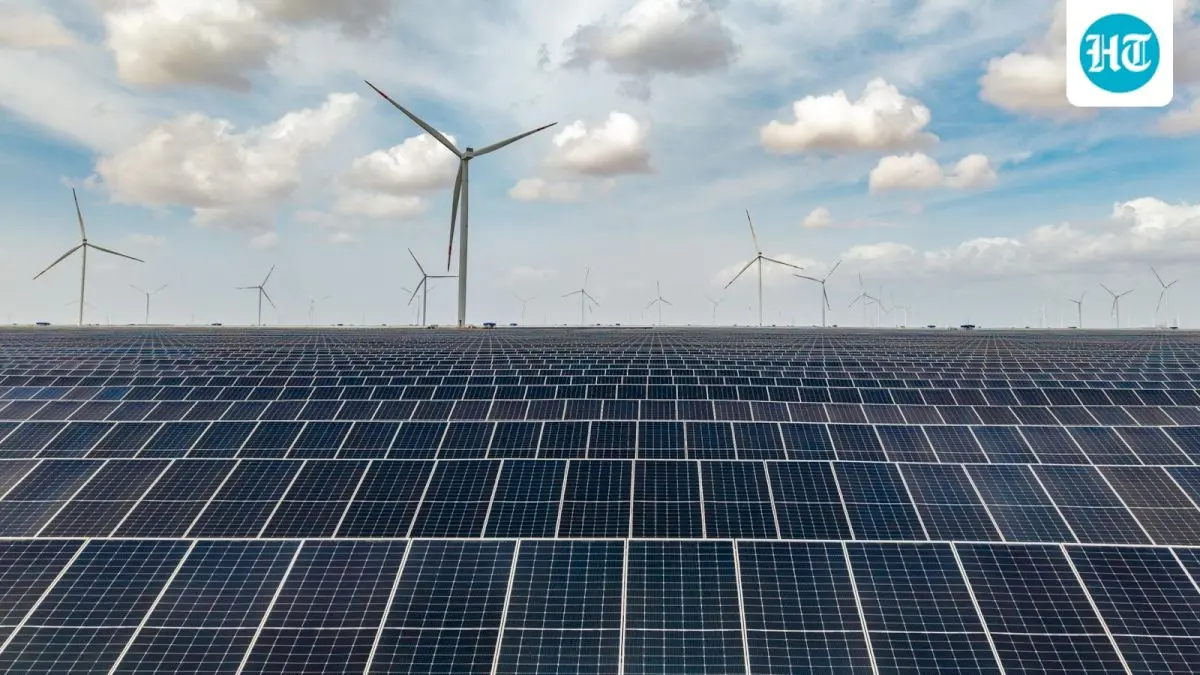
India's installed non-fossil electricity capacity has crossed 300 GW, the renewable energy ministry announced on Sunday, achieving over 60% of the 500 GW target set for 2030. As of July 31, 2026,…
The Story in Brief
India's installed non-fossil electricity capacity has crossed 300 GW, the renewable energy ministry announced on Sunday, achieving over 60% of the 500 GW target set for 2030. As of July 31, 2026, the capacity stood at 300.50 GW, with solar power accounting for 164.59 GW, followed by wind at 58.14 GW, hydropower at 57.24 GW, bio-power at 11.75 GW, and nuclear at 8.78 GW. Non-fossil sources now constitute more than 54% of India's total generation capacity of about 552 GW.
The government reported a record addition of 55.29 GW of non-fossil capacity in 2025-26 alone, including 44.6 GW of solar and 6 GW of wind. Renewable energy generation rose from 190.96 billion units in 2014-15 to 477.79 billion units in 2025-26. On July 31, the Union cabinet approved the Pradhan Mantri Surya Sarovar Yojana (PM-SSY) to install 5,000 MW of floating solar panels on reservoirs and water bodies, with each project required to have a minimum two-hour storage capacity (10,000 MWh).

The Indian Opinion
The government's 'Aatmanirbhar' framing of the 300 GW milestone should not obscure the actual test: can India sustain this pace without compromising power affordability or grid stability? Solar, at 164.59 GW, is the star, but its intermittency demands storage and transmission upgrades. The new floating solar scheme with mandatory two-hour storage (10,000 MWh) is a concrete test. Watch if projects meet that storage requirement on time. A number to track: the actual renewable energy generation share in India's total electricity, not just installed capacity.
Sources (2): hindustantimes.com, energy.economictimes.indiatimes.com
This story was synthesised by AI from the 2 sources linked above.
Updated: this story now draws on 2 sources.