















Now Reading: India unveils national organ swap registry to boost transplants
-
01
India unveils national organ swap registry to boost transplants



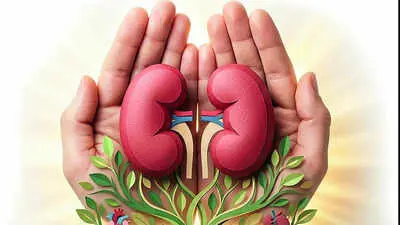
India has introduced a national framework for organ swaps, including standard operating procedures and a unified registry managed by the National Organ and Tissue Transplant Organisation (NOTTO). The system will replace manual, hospital-level matching with automated allocation, single-window clearances, and simultaneous surgeries. The protocol has been shared with states for immediate rollout.
The framework allows incompatible donor-recipient pairs to exchange donors across hospitals, expanding beyond two-family exchanges to multi-family chains and combined organ swaps. Government estimates suggest a functioning national pool could unlock 3,000 to 4,000 additional living-donor kidney transplants annually from mismatched pairs. India recorded 20,138 organ transplants in 2025.
For patients like Hemant Kumar Thakur, who underwent a kidney transplant with his wife as donor, the process remains challenging, especially with inter-state approvals and the risk of donors withdrawing consent. Doctors warn that unscrupulous intermediaries may target patients, and consent can be withdrawn until the moment of organ retrieval.
Indian Opinion Analysis
livemint.com leads with the government's new framework, citing official estimates and NOTTO's director to frame the registry as a solution to a severe organ shortage. The Times of India leads instead with patient experience and warnings from doctors, foregrounding the struggle, paperwork and risk of exploitation that the policy does not address. The livemint article treats the policy as a done rollout, the Times article treats it as background to a still-uncertain human process. The balanced reading is that while the registry promises systemic efficiency, it does not change the consent rules or inter-state approval delays that patients and coordinators say remain the hardest part. The implementation depends on state-level adoption, which is yet to be measured.
The Times of India notes that consent can be withdrawn before organ retrieval, a risk the registry alone cannot remove.
Coverage: 2 sources, 2 neutral
Sources (2): livemint.com (neutral report), timesofindia.indiatimes.com (neutral report)
This story was synthesised by AI from the 2 sources linked above. Methodology and corrections.
Updated: this story now draws on 2 sources.