

Now Reading: Organ transplants in India hit nearly 20,000 in 2025
-
01
Organ transplants in India hit nearly 20,000 in 2025


India recorded nearly 20,000 organ transplants in 2025, up from fewer than 5,000 in 2013, according to a February 2026 Press Information Bureau release. The National Organ and Tissue Transplant Organisation (NOTTO)…
The Story in Brief
India recorded nearly 20,000 organ transplants in 2025, up from fewer than 5,000 in 2013, according to a February 2026 Press Information Bureau release. The National Organ and Tissue Transplant Organisation (NOTTO) coordinates the process through a network of regional bodies, hospitals and transplant coordinators.
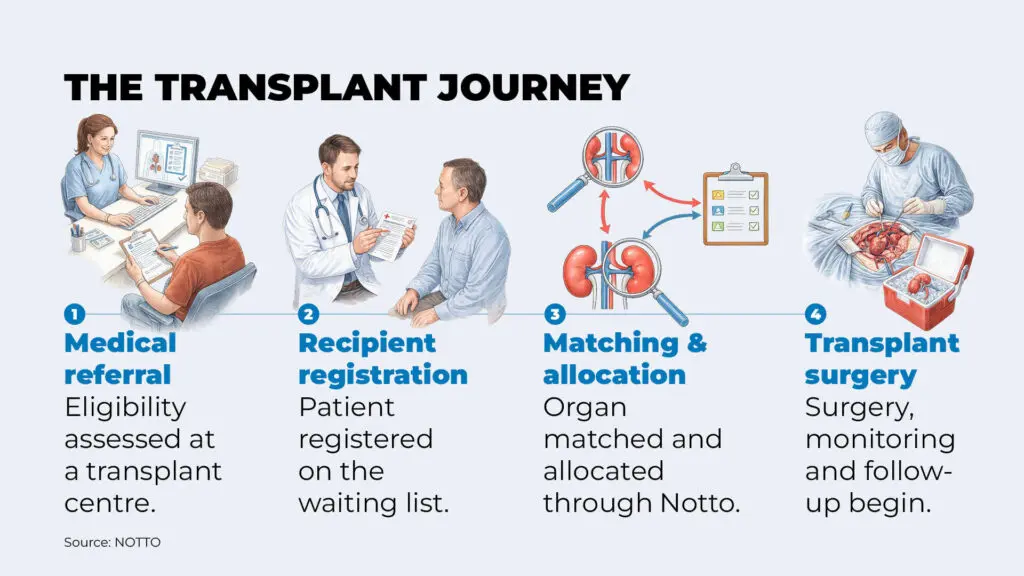
The journey from referral to surgery involves medical evaluation, registration, waitlisting and organ matching. Patients are assessed by a multidisciplinary team and placed on waiting lists based on medical criteria such as the MELD score for livers. Living donation dominates, especially for kidneys and livers. Deceased donation requires consent from the next of kin after brain-stem death certification. The Transplantation of Human Organs and Tissues Act (THOTA) prohibits commercial dealings and imposes penalties for violations.
The Indian Opinion
The jump in transplant numbers is impressive, but the usual narrative that India has solved its organ shortage misses the point. Most transplants still depend on living donors, especially for kidneys and livers. Deceased donation, though rising, remains a fraction of the need. The system works for those who can navigate it, but thousands on waiting lists still die. The real test is not how many transplants we do, but how many we can do without exploiting the poor or relying on luck. Will the next five years see deceased donation double, or will living donors continue to bear the burden? That is the question that separates progress from hype.
Sources (2): timesofindia.indiatimes.com, telanganatoday.com
This story was synthesised by AI from the 2 sources linked above.
Updated: this story now draws on 2 sources.