














Now Reading: ISRO to launch GISAT-1A in September after probe into failures
-
01
ISRO to launch GISAT-1A in September after probe into failures


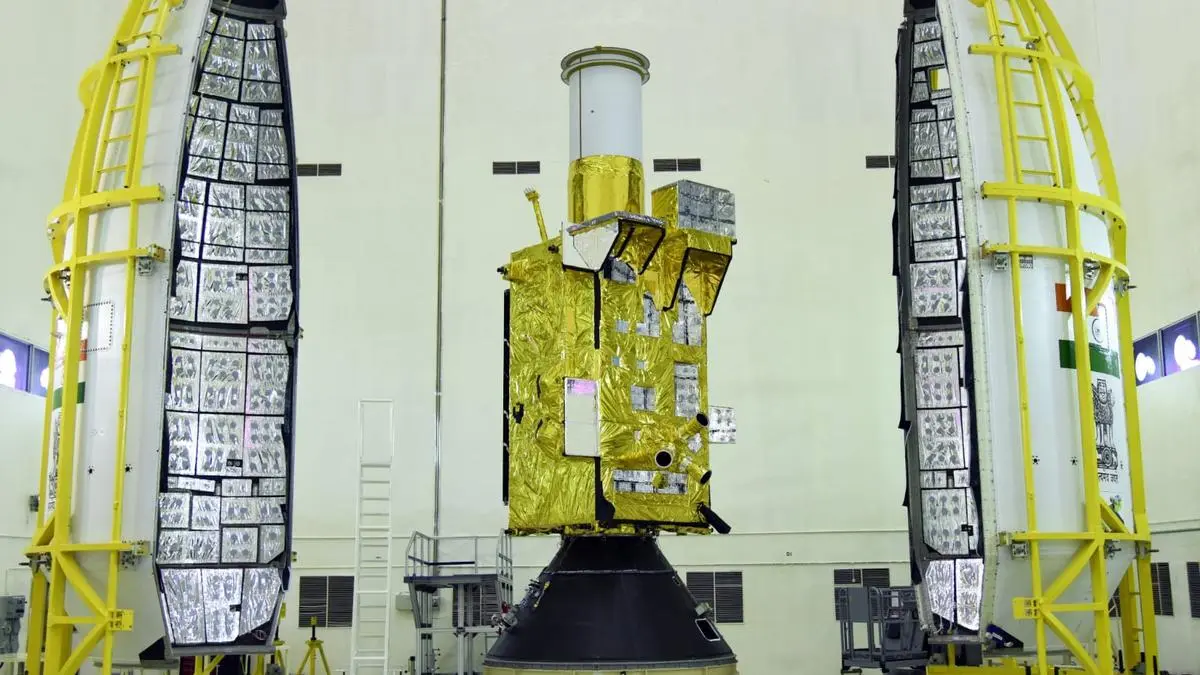
The Indian Space Research Organisation (ISRO) is set to launch the GISAT-1A satellite in September, marking its first mission since two successive PSLV failures in 2025 and early 2026. The launch is a replacement for the GISAT-1 satellite that was lost in a GSLV Mk-II failure in August 2021 due to a cryogenic upper-stage malfunction. Union Minister Jitendra Singh told The Hindu on June 13 that the government had identified and resolved the failure causes but would not publish the National Level Expert Committee report, a break from past practice.

The Federal reports that two strategic satellites, NVS-03 and GISAT-1A, are ready at Sriharikota but their launch dates remain unclear, with experts questioning why India has not considered using foreign rockets. India's NavIC navigation constellation now has only three operational satellites, leaving it unable to provide full positioning services. The parliamentary standing committee on science and technology has stated that replacement satellites NVS-03, NVS-04, and NVS-05 will be launched over the next 15-18 months. ISRO has also suffered a failure with the NVS-02 satellite, which reached the wrong orbit after launch.
Indian Opinion Analysis
The Hindu leads with the September launch date and the government's refusal to publish the failure report, framing the story around transparency. The Federal leads with the strategic impact, NavIC's fragility and the lack of official answers, and quotes experts questioning ISRO's caution and suggesting foreign rockets. Neither source is sensationalist. The Hindu is neutral-report, while The Federal is government-critical, foregrounding capability gaps and the absence of official explanations. A careful reader should note that both sources agree on the core facts: three NavIC satellites work, replacements are 15-18 months away, and the failure report is withheld. The key number to watch is the September launch outcome.
Coverage: 2 sources, 1 government-critical, 1 neutral
Sources (2): thehindu.com (neutral report), thefederal.com (government critical)
This story was synthesised by AI from the 2 sources linked above. Methodology and corrections.
Updated: this story now draws on 2 sources.