























Now Reading: Jellyfish swarm shuts three reactors at France’s Gravelines plant
-
01
Jellyfish swarm shuts three reactors at France’s Gravelines plant

Jellyfish swarm shuts three reactors at France’s Gravelines plant


A large jellyfish swarm forced EDF to shut three reactors at France’s Gravelines nuclear plant and halve output from a fourth after the animals clogged seawater cooling equipment. A fifth reactor was…
The Story in Brief
A large jellyfish swarm forced EDF to shut three reactors at France’s Gravelines nuclear plant and halve output from a fourth after the animals clogged seawater cooling equipment. A fifth reactor was already under planned maintenance, leaving one of the six units operating at full capacity. Each reactor can generate about 900 megawatts.
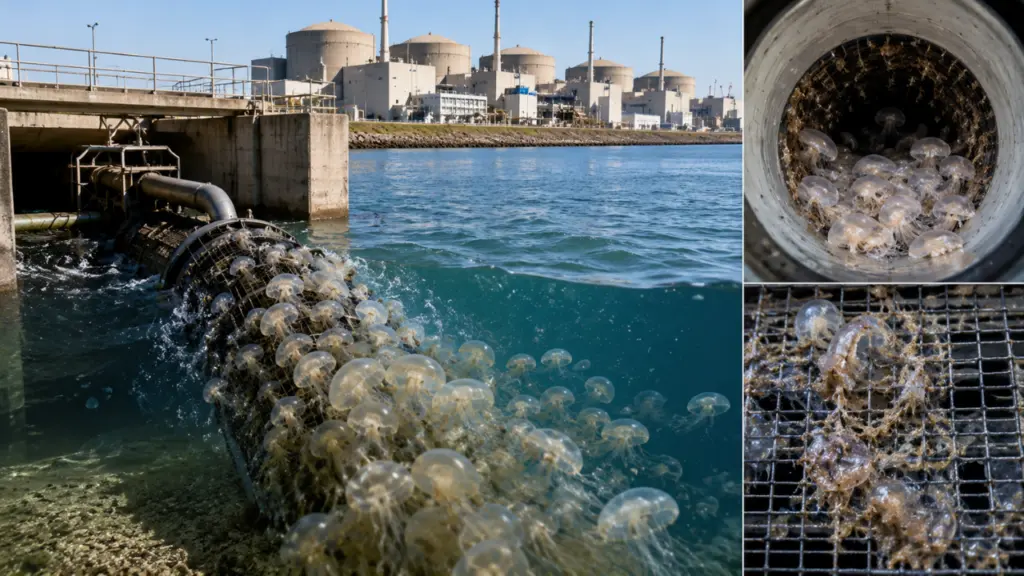
Gravelines draws seawater from a canal linked to the North Sea. EDF said the incident posed no threat to workers, plant safety or the environment. Fishing boats helped reduce the swarm, while vacuum trucks cleared jellyfish from the system. Cameras installed after a wider outage last year are being used for early warnings. The affected reactors could restart after inspections if no new jellyfish are detected.
The Indian Opinion
Claims that the episode proves nuclear power is inherently unsafe overstate what happened. EDF reports no danger to people or the environment, but the disruption shows a real weakness at coastal plants that depend on open-water cooling. Heatwaves, drought and marine swarms can all reduce available output. The useful test is whether EDF can restore the three reactors quickly and prevent another large shutdown at Gravelines.
Source: timesofindia.indiatimes.com
This story was synthesised by AI from the source linked above.