













Now Reading: J&K High Court strikes down water usage charge on hydropower projects
-
01
J&K High Court strikes down water usage charge on hydropower projects



The Story in Brief
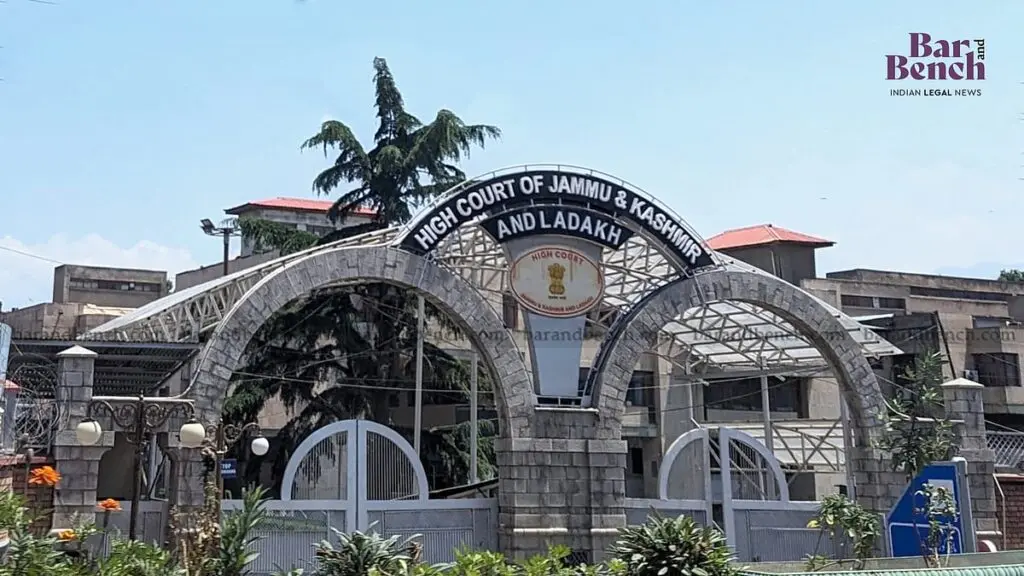
The High Court of Jammu & Kashmir and Ladakh struck down water usage charges on hydropower projects on 29 October, ruling they amount to an unconstitutional tax on electricity generation. A division bench of Justice Sanjay Dhar and Justice Rajnesh Oswal declared the relevant provisions of the Jammu and Kashmir Water Resources (Regulation and Management) Act, 2010 ultra vires the Constitution, quashed demand notices issued to 13 independent power producers and restrained the Union Territory government from imposing any such levy.
The Court held that water use by hydropower projects is non-consumptive and inextricably linked to electricity generation, making any charge on it a tax on generation, which the erstwhile state legislature lacked competence to impose. The Union of India supported the petitioners' position. The J&K government had defended the levy as a regulatory measure under its power to regulate water resources, but the Court rejected the argument, noting the charge was calculated on turbine head height, not water volume consumed, and was not linked to any specific service. The government's contention that the law's adoption under the Jammu & Kashmir Reorganisation Act, 2019 had legitimised it was also dismissed on the ground that a law unconstitutional at enactment cannot be validated by subsequent parliamentary adoption.
Indian Opinion Analysis
All four sources, LiveLaw, the Times of India, The Hindu and Daily Excelsior, carry uniform straight-reporting coverage of the High Court's ruling. Each leads with the same core finding: that the water usage charge is a tax on electricity generation, that the erstwhile state legislature lacked competence to impose it, and that the Court has quashed demand notices and restrained the government. The only editorial difference is framing emphasis: the Times of India opens with ‘setback to J&K govt’ and quotes the government's defence, while Daily Excelsior calls it a ‘well celebrated judgment’. The difference is marginal. The balanced reading from all four is identical. The concrete outcome is the restraint order against the Union Territory government, which leaves the validity of the 2010 Act itself only partially struck down, the next step will be the government's decision on appeal.
Coverage: 4 sources, 4 neutral
Sources (4): livelaw.in (neutral report), timesofindia.indiatimes.com (neutral report), thehindu.com (neutral report), dailyexcelsior.com (neutral report)
This brief was synthesised by AI from the 4 sources linked above, so one read covers every framing they carry. Methodology and corrections.
Update, 30 October 2026: this story now draws on 4 sources.