














Now Reading: Madras High Court grants legal personhood to Tamirabharani river
-
01
Madras High Court grants legal personhood to Tamirabharani river



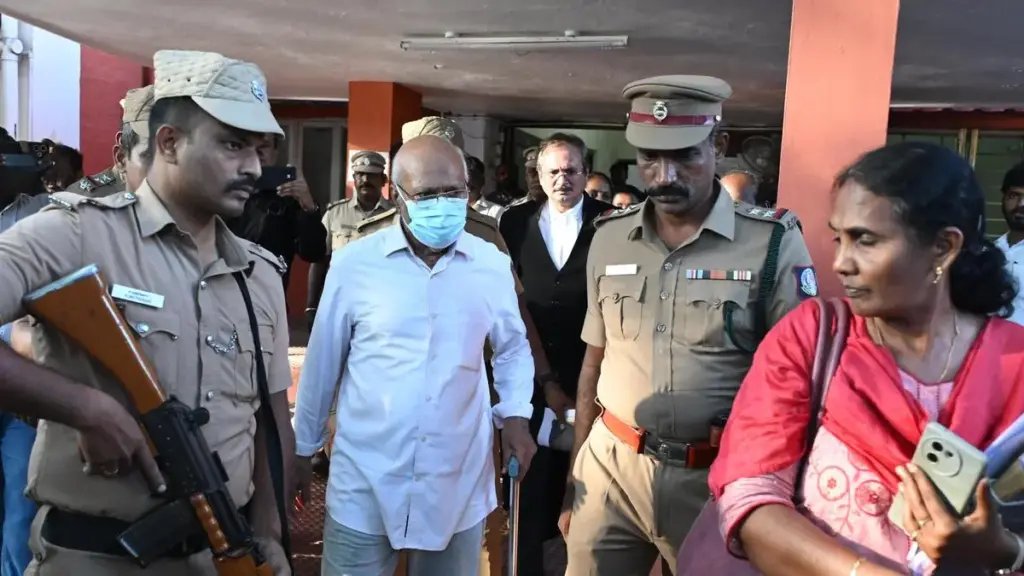
The Madurai Bench of the Madras High Court has recognised the Tamirabharani river as a legal person, granting it the right not to be polluted. The court ruled that the river, treated as a deity under Hindu law, can sue and be sued for this limited purpose. This move circumvents a Supreme Court order that had stayed a 2017 Uttarakhand High Court judgment granting legal personality to the Ganga and Yamuna.

The court acted on evidence that about 90 tonnes of clothes, two tonnes of ash, and three tonnes of other waste were removed from the river in three weeks from funeral rites, violating the Water (Prevention and Control of Pollution) Act, 1974. It balanced the right to practice religion under Article 25 with the right to a healthy environment under Article 21. The court allowed ash immersion only in unfired earthen pots.
Deccan Herald notes the Supreme Court in 2023 declined to grant legal personality to animals. The Hindu reports the court erred by allowing ash immersion, citing studies showing cremains pose ecological risks. The judgment is likely to face administrative hurdles, as happened with the Ganga and Yamuna order.
Indian Opinion Analysis
Deccan Herald frames the judgment as a limited legal workaround that may face administrative hurdles, noting past stays. The Hindu highlights the court's compromise on allowing ash immersion, which it says poses ecological risk, and sees the ruling as a circumvention of the Supreme Court's stance. Both agree the legal personality is restricted to pollution, but The Hindu adds a concrete environmental critique. The key test will be whether the Madras High Court's deity-based logic withstands a Supreme Court challenge, as the 2017 Uttarakhand order did not.
Coverage: 2 sources, 1 government-critical, 1 neutral
Sources (2): deccanherald.com (neutral report), thehindu.com (government critical)
This brief was synthesised by AI from the 2 sources linked above, so one read covers every framing they carry. Methodology and corrections.
Updated: this story now draws on 2 sources.