














Now Reading: SC judgment on ‘industry’ test leaves mathematical ambiguity
-
01
SC judgment on ‘industry’ test leaves mathematical ambiguity



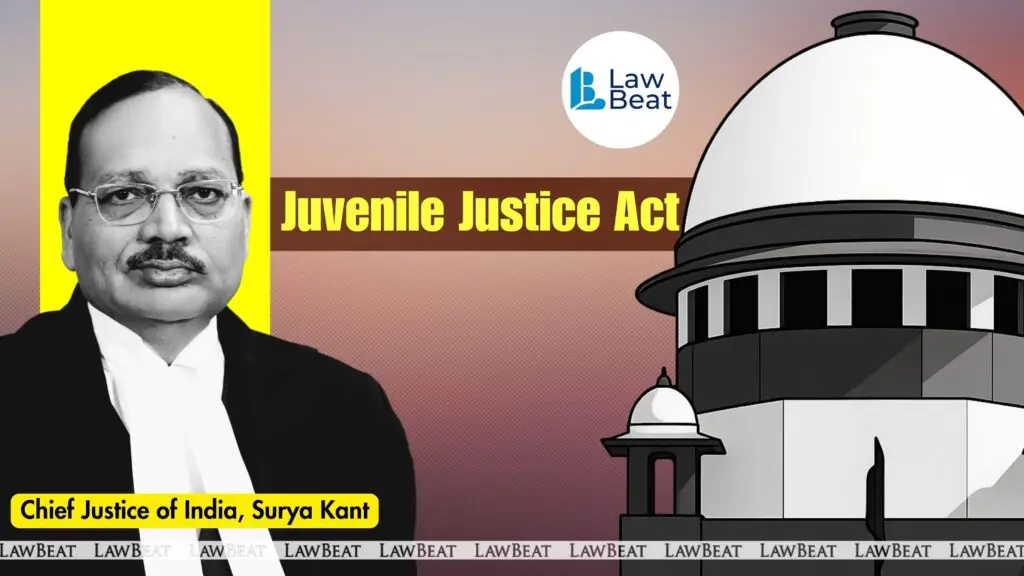
A nine-judge Supreme Court bench delivered a fractured judgment on August 20 on whether to replace the 1978 Bangalore Water Supply triple test for defining 'industry' under the Industrial Disputes Act. Chief Justice Surya Kant authored an opinion for four judges that reformulated the test, giving more weight to commercial character. Justice PS Narasimha did not join this reformulation, instead holding that the reference need not be answered because the ID Act was repealed on November 21, 2025 and replaced by the Industrial Relations Code.
The other four judges, Justices Nagarathna, Datta, Bhuyan, and Bagchi, rejected the need for a new test, with Nagarathna calling the exercise academic and Datta and Bhuyan saying it required no answer. The Hindustan Times reports that this leaves the CJI's reformulation with only four clear supporters, creating ambiguity about whether a majority exists for the new test. The Hindu notes that even the CJI's opinion describes its own reformulation as 'hypothetical' and says it will not apply to pending cases.
Justice Narasimha expressly stated that Bangalore Water Supply should continue to govern pending disputes. The Industrial Relations Code must be interpreted independently, and the four questions framed concerned only the now-repealed ID Act.
Indian Opinion Analysis
Hindustan Times leads with the numerical puzzle of how a judgment that reads as 4-4-1 on the substantive question was announced as a 5-4 verdict, foregrounding institutional ambiguity. The Hindu emphasises that the CJI's own opinion calls its reformulation hypothetical and that the ID Act is dead, rendering the entire exercise academic. Both agree the new test has no practical application now. The key takeaway is that Bangalore Water Supply remains the governing precedent for pending cases, while the IRC's definition of industry awaits interpretation in a future case entirely unburdened by this judgment.
The real implication is that the CJI's attempt to recalibrate labour law landed on no operative holding. The IRC's Section 2(p) will be litigated from scratch, and the first case to reach a bench on that provision will be the true test.
Coverage: 2 sources, 2 neutral
Sources (2): hindustantimes.com (neutral report), thehindu.com (neutral report)
This story was synthesised by AI from the 2 sources linked above. Methodology and corrections.
Updated: this story now draws on 2 sources.