












Now Reading: Maharashtra FDA chief warns against fat, salt and sugar during festivities
-
01
Maharashtra FDA chief warns against fat, salt and sugar during festivities

Maharashtra FDA chief warns against fat, salt and sugar during festivities

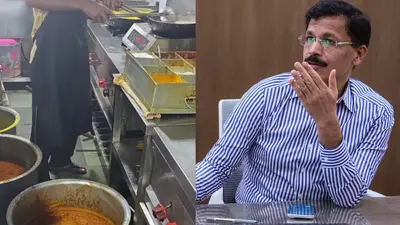
Maharashtra FDA commissioner Tukaram Mundhe has announced a state-wide food safety plan ahead of the festive season, warning against excessive consumption of high-fat, salty and sugary (HFSS) foods. Speaking at a Mumbai Press Club event on Wednesday, Mundhe said the regulator had drawn up separate measures for before, during and after the festive period. He urged people to eat HFSS foods only in limited quantities.
Mundhe said restrictions on HFSS products near schools have been in place since 2020 and implementation began in 2021. He noted that several schools had changed their menus and the FDA had received hundreds of letters welcoming the move. The FDA is also inspecting suppliers for the midday meal programme and has suspended one licence. Food supplied to anganwadis and schools, including central kitchens, is being tested.
Mundhe said food safety regulations apply to all food business operators, whether serving mahaprasad, street food or five-star hotel meals. More than 115 government and semi-government establishments have been inspected recently, and licences of 20 to 25 were suspended for violations. Schools and anganwadis will be inspected at least twice a year, he added.
Indian Opinion Analysis
The FDA's push comes under the Food Safety and Standards Act, 2006, which gives state commissioners broad powers to inspect and suspend licences. What is notable here is the explicit inclusion of government-run kitchens and mid-day meal suppliers, historically a politically sensitive area because they involve public funds and large-scale feeding. Mundhe's insistence that a government FBO is no different from a private one signals a stricter enforcement posture. The real impact will be measured by how many licences are suspended in the coming weeks and whether schools actually comply with the HFSS ban, which has been on paper since 2020 but faced patchy implementation.
Source: timesofindia.indiatimes.com
This brief was synthesised by AI from the source linked above. Methodology and corrections.