














Now Reading: Marking document as exhibit not proof of its contents: Supreme Court
-
01
Marking document as exhibit not proof of its contents: Supreme Court


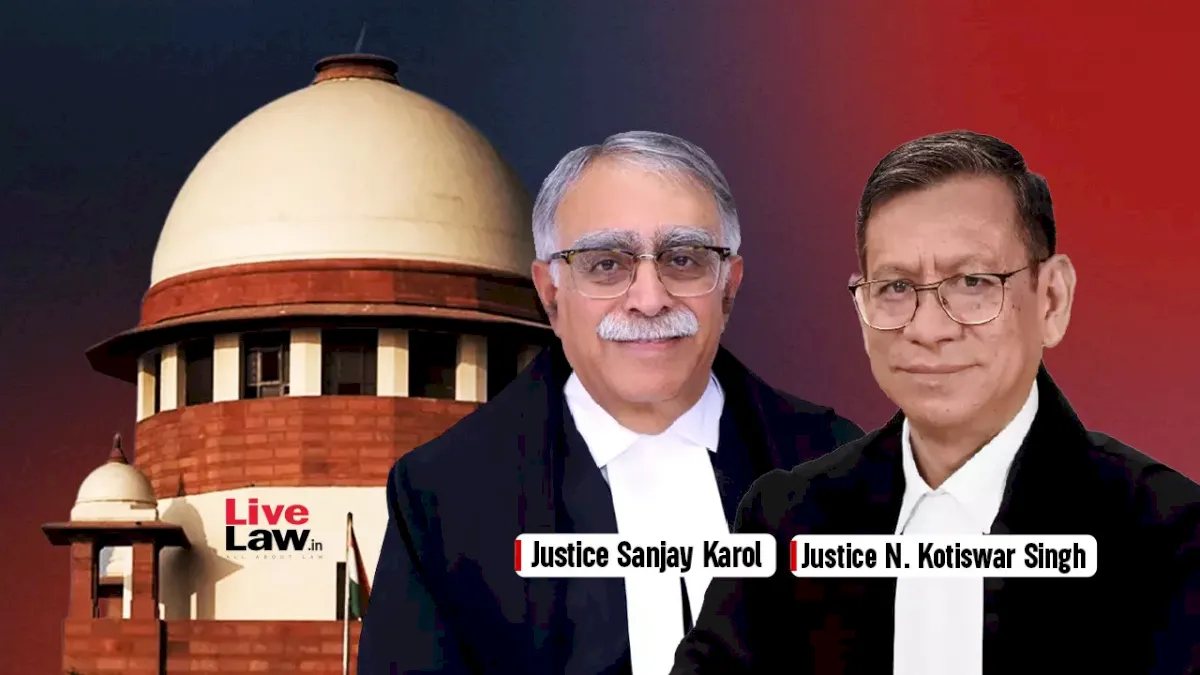
The Supreme Court held on Friday that merely marking a document as an exhibit does not prove its contents. The bench of Justices Sanjay Karol and Nongmeikapam Kotiswar Singh ruled that such…
The Story in Brief
The Supreme Court held on Friday that merely marking a document as an exhibit does not prove its contents. The bench of Justices Sanjay Karol and Nongmeikapam Kotiswar Singh ruled that such documents must still be proved in accordance with law. The case arose from a Madras High Court decision in a probate proceeding where the High Court had allowed exhibition of certain documents except photocopies.

The top court upheld the High Court's refusal to exercise power under Order XIII Rule 3 of the Civil Procedure Code to eschew those documents. It found that the objections did not make them prima facie inadmissible or irrelevant. The court clarified that permitting documents to be marked as exhibits does not automatically establish their authenticity or truthfulness.
The Indian Opinion
The Supreme Court has simply restated a settled principle, but the notion that once a document is marked as an exhibit it becomes automatically true persists in many trial courts. This ruling should check lazy judicial shortcuts. The real test will be whether lower courts now insist on proper proof for each exhibited document, or continue to treat marking as a substitute for evidence. Are litigants who have relied on this misreading of procedure now forced to relitigate long-standing disputes?
Source: livelaw.in
This story was synthesised by AI from the source linked above.