














Now Reading: Netflix’s ‘The Last House’: Family escapes, giant sea creature spared
-
01
Netflix’s ‘The Last House’: Family escapes, giant sea creature spared

Netflix’s ‘The Last House’: Family escapes, giant sea creature spared

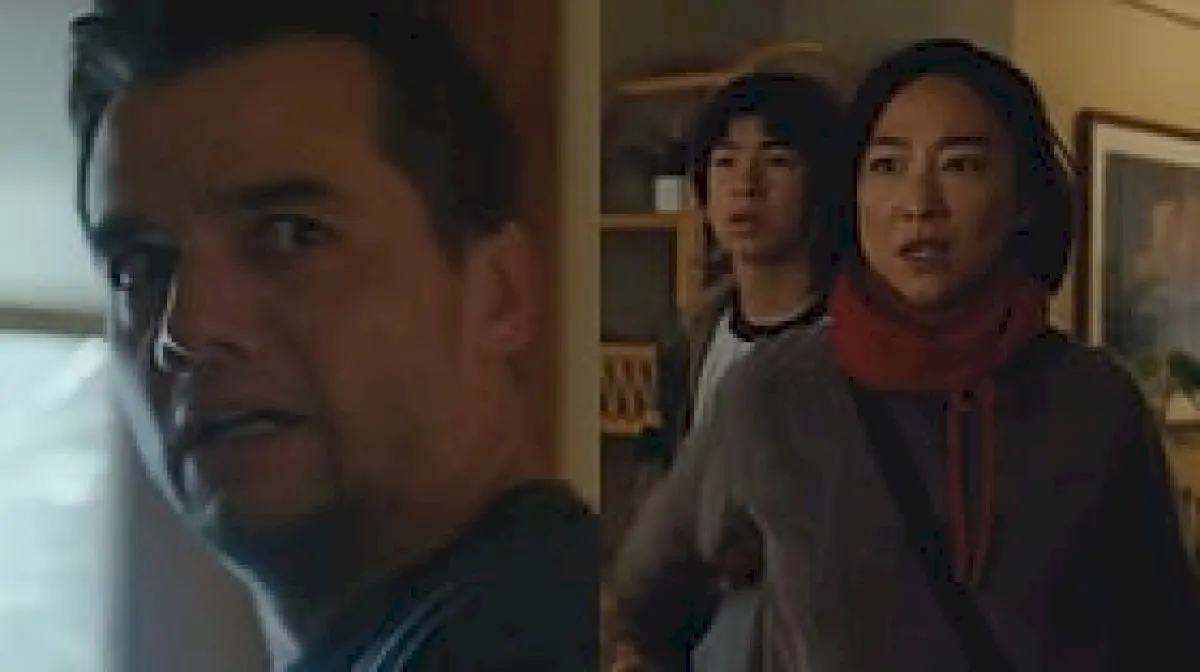
In Netflix's 'The Last House', the Delgado family survives five years trapped inside their Seattle home by a mysterious rain. When a daughter is bitten by an animal, mother Ruth crawls through…
The Story in Brief
In Netflix's 'The Last House', the Delgado family survives five years trapped inside their Seattle home by a mysterious rain. When a daughter is bitten by an animal, mother Ruth crawls through underground pipes to fetch medicine but faces a giant sea creature. The family later confronts the creature but father Jason realises it is protecting its home and sets it free. The doors open. The family sails away, hearing a faint voice on the radio suggesting other survivors may exist.
Critics note the film wastes a strong premise, what if the Covid lockdown never ended?, by never developing its characters or their conflicts. The family is 'milquetoast', the script relies on plot contrivances like an open chimney. Unlike 'A Quiet Place', 'The Last House' avoids logical or grim conclusions. It also frames characters dead-centre, as if designed for vertical phone viewing, which critics see as a worrying trend for streaming films.
The Indian Opinion
The film tries to ape survival hits like 'A Quiet Place' but spoon-feeds every moment. Reviewers rightly note that the family never truly argues or breaks down, missing a chance to examine real human limits under lockdown. Instead, the script invents a giant sea monster and forgettable bravery. The real test: can any survival thriller work when the protagonists barely struggle against each other? That is the question Netflix chose not to ask.
Sources (2): freepressjournal.in, thefederal.com
This story was synthesised by AI from the 2 sources linked above.
Updated: this story now draws on 2 sources.