










Now Reading: Niti Aayog says satcom must connect 50 crore unconnected Indians
-
01
Niti Aayog says satcom must connect 50 crore unconnected Indians


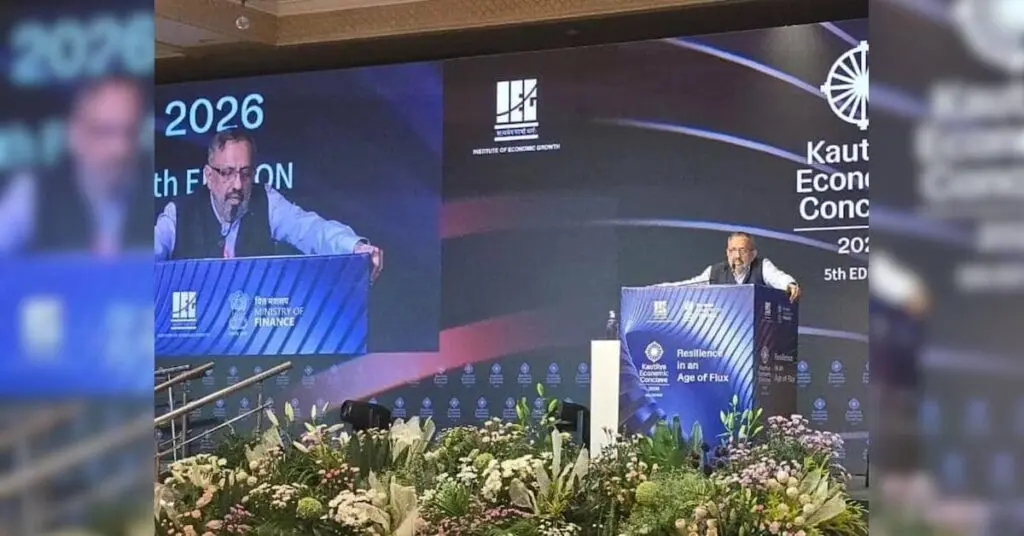
Satellite communication (satcom) can deliver India's ₹1 lakh crore digital connectivity opportunity and connect 50 crore unconnected people, mostly in rural areas, Niti Aayog member Abhay Karandikar said at the India Satcom 2026 conference. Karandikar described the sector as undergoing a "remarkable phase of technological evolution" with smaller satellites, large constellations and on-board intelligence.

Broadband India Forum president TV Ramachandran said 60-70 per cent of India's population depends on agriculture, where terrestrial networks are unviable but satcom can enable IoT devices to collect data and improve yields. Ramachandran added that satcom connectivity could also help set up factories in rural areas with cheap labour.
Department of Telecom member Manish Sinha said the future lies in integrated networks combining fibre, mobile, WiFi and satellite. BIF noted the space start-up ecosystem has grown from one in 2022 to over 400 in 2026, with the industry targeting 8 per cent of GDP by 2033.
Indian Opinion Analysis
India’s satcom push comes as terrestrial fibre and mobile networks remain economically unviable in two-thirds of the country’s geography. The ₹1 lakh crore annual opportunity BIF cites is a forward-looking figure, not a current revenue, actual satcom service revenue today is a fraction of that. The government’s 2023 space policy opened orbit and spectrum allocation for private players, and commercial satellite broadband licences are pending allocation by the Department of Space. The key near-term signal to watch is the auction or administrative assignment of satcom spectrum, which will determine how quickly players can connect those 50 crore unconnected users. Watch for DoT’s August 2026 deadline for comments on the new satcom licensing framework.
Source: thehindubusinessline.com
This story was synthesised by AI from the source linked above. Methodology and corrections.