







Now Reading: Ex-Isro chief, experts back private sector entry in space
-
01
Ex-Isro chief, experts back private sector entry in space


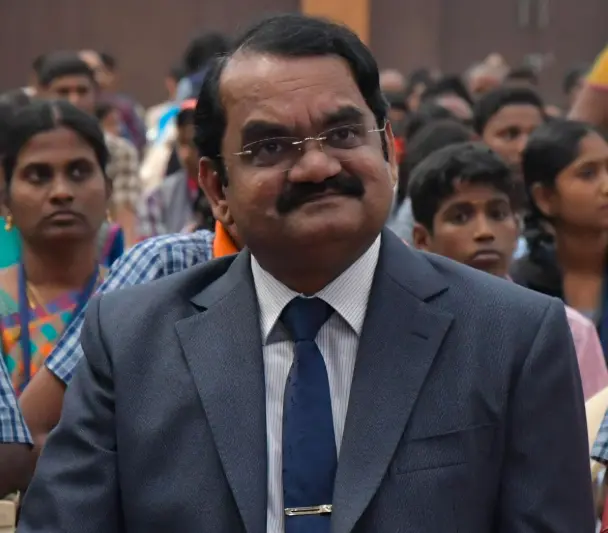
The opening of India's space sector to private players has drawn praise from former Isro chief Mayilswamy Annadurai and multiple experts, who say it will boost large-scale manufacturing and global competitiveness. Annadurai, addressing a press conference in Pudukkottai on Sunday, said Isro is ready to manufacture satellites with private participation and work is under way to produce rocket spare parts at Kulasekarapattinam.
At the National Space Technology Conclave-2026 in Chandigarh on Monday, IN-SPACe director Vinod Kumar said more than 450 space start-ups are now operating in India, up from zero before June 2020. He credited the Indian Space Policy 2023 for clearly defining roles of Isro, IN-SPACe and NSIL. Former Isro officials Nilesh M Desai and YVN Krishnamurthy urged students to develop solutions for lunar and martian habitation. Chandigarh University unveiled a declaration to strengthen university contributions to space education and research.
Indian Opinion Analysis
The Deccan Chronicle report highlights Annadurai's views in isolation and links the private sector opening to manufacturing and education reform, presenting it as a government-aligned initiative. The Hindustan Times story leads with the 450 start-ups figure and the formal policy framework, backed by IN-SPACe and ISRO officials, framing the shift as an established success. Neither source includes critical voices, no mention of regulatory hurdles, failed start-ups, or delays in the policy rollout. A careful reader can see that both outlets broadly support a government narrative of progress, differing only in regional versus national scope. The next milestone to watch is the impact of the declared university roadmap on space talent pipeline shortages.
Coverage: 2 sources, 2 pro-government
Sources (2): deccanchronicle.com (pro government), hindustantimes.com (pro government)
This story was synthesised by AI from the 2 sources linked above. Methodology and corrections.
Updated: this story now draws on 2 sources.