




Now Reading: Orissa HC: Religious pandals must not completely block roads
-
01
Orissa HC: Religious pandals must not completely block roads


The Story in Brief
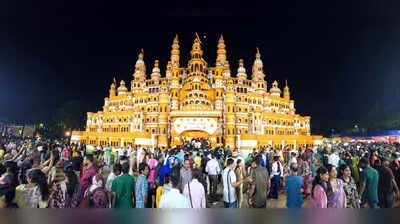
The Orissa High Court has held that temporary pandals erected on public roads for religious festivals must not completely obstruct vehicular movement or deny residents access to their homes. A Division Bench of Chief Justice Harish Tandon and Justice Mruganka Sekhar Sahoo directed the state government to ensure adequate space for traffic and emergency vehicles, including ambulances and fire engines, while granting permission for such festivals.
The court disposed of a PIL filed by Sarat Kumar Gajendra, whose house is about 50 metres from a pandal. The state submitted that a 22-foot passage was left for vehicles. The bench observed that the larger public interest in community celebrations outweighs individual inconvenience, provided safeguards are followed. It also directed enforcement of noise limits and time restrictions.
Indian Opinion Analysis
The coverage is uniform straight reporting across all six outlets, each attributing the same key rulings to the same division bench. Lawbeat.in, Times of India, Orissa Post, LiveLaw, and Verdictum all lead with the court's refusal to order a blanket ban and its balancing of religious freedom against the right to movement. Odisha Bytes alone frames the story through the lens of festive traffic chaos in Bhubaneswar, describing ambulances trapped in gridlock and citizens demanding stricter enforcement, a context the court order itself does not address. The balanced reading is that the court set a clear principle: pandals may continue if a 22-foot passage and emergency access are maintained, with noise and time curbs.
Coverage: 6 sources, 5 neutral, 1 sensationalist
Sources (6): lawbeat.in (neutral report), timesofindia.indiatimes.com (neutral report), orissapost.com (neutral report), odishabytes.com (sensationalist), livelaw.in (neutral report), verdictum.in (neutral report)
This brief was synthesised by AI from the 6 sources linked above, so one read covers every framing they carry. Methodology and corrections.