














Now Reading: Turkey, Pakistan, Saudi Arabia sign defence pact; Egypt may join
-
01
Turkey, Pakistan, Saudi Arabia sign defence pact; Egypt may join

Turkey, Pakistan, Saudi Arabia sign defence pact; Egypt may join

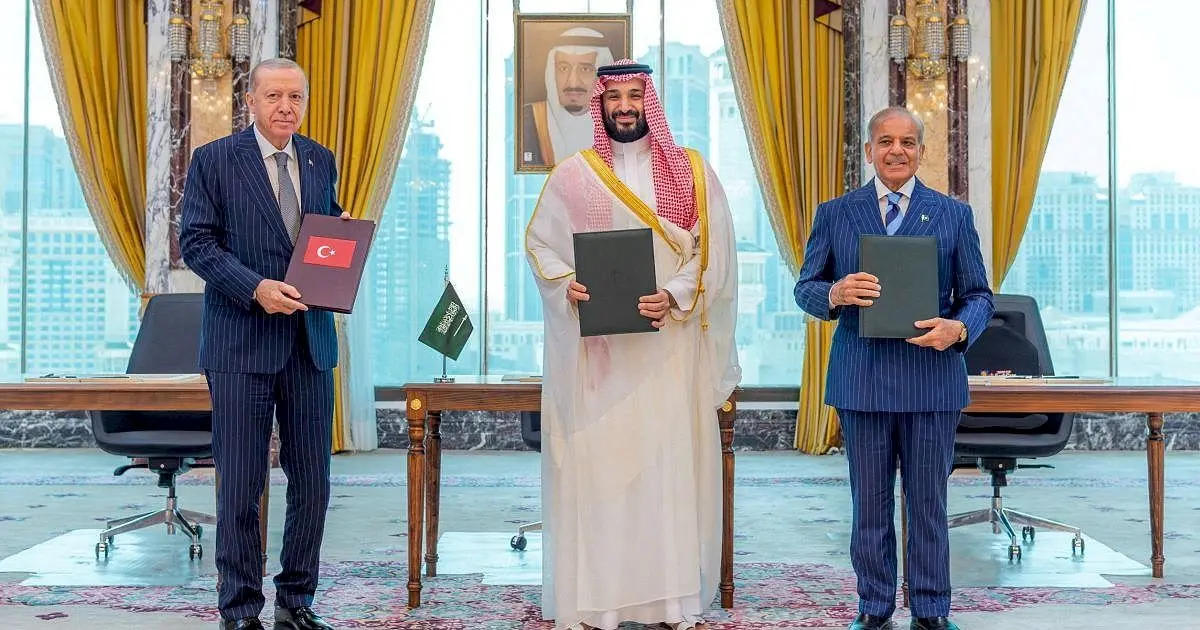
Pakistan, Turkey and Saudi Arabia signed the Mecca Joint Defence Agreement on August 7, committing that an armed attack on any member would be treated as an attack on all three. Turkish…
The Story in Brief
Pakistan, Turkey and Saudi Arabia signed the Mecca Joint Defence Agreement on August 7, committing that an armed attack on any member would be treated as an attack on all three. Turkish Foreign Minister Hakan Fidan said the pact mirrors NATO’s Article 5 but is not directed against Iran. Fidan added that Egypt could join once technical issues are resolved. The three countries also formed the R4 group with Egypt to coordinate on regional issues including the Iran war.
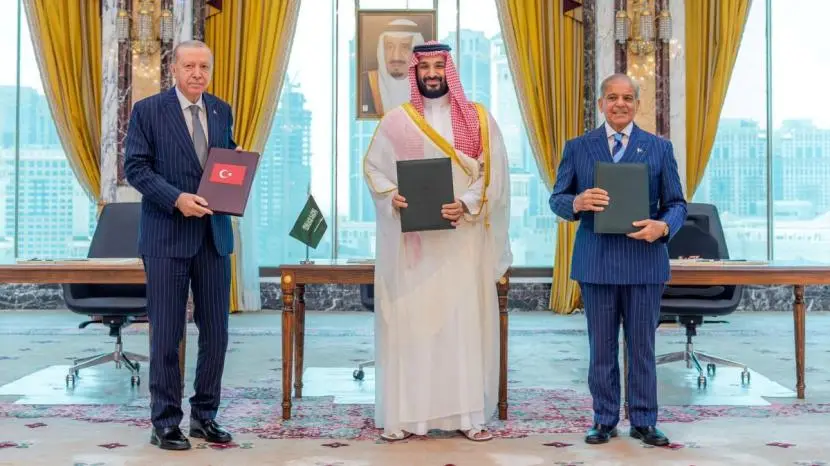
Some analysts quoted by rediff.com said the pact could reduce the United States' strategic role in West Asia, pointing to doubts about US security guarantees after Iran destroyed US bases in the recent war. Separately, the US is seeking an Iranian guarantee not to target commercial vessels in the Strait of Hormuz, Vice-President Vance said. Turkey also wants to join an international coalition to protect Red Sea shipping from Houthi attacks.
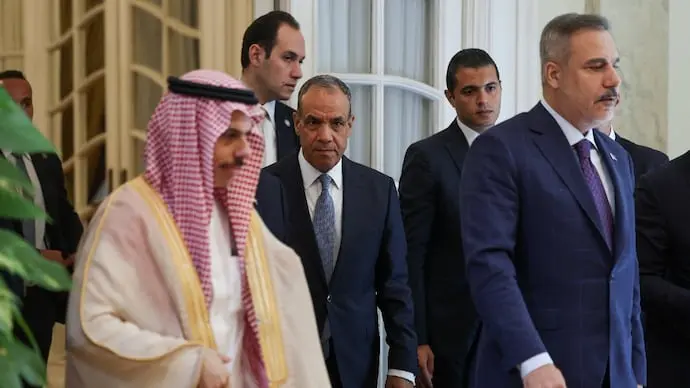
The Indian Opinion
Claims that the pact ends the US role in West Asia are premature. Turkey itself stressed the agreement is not aimed at any country and remains open to expansion. The claim that it deters India lacks evidence and ignores that Pakistan already has close defence ties with Saudi Arabia and Turkey. Watch for Egypt’s actual decision to join and whether the US reduces its military footprint in the Gulf. Until then, the pact is a statement of intent, not a done shift in power.
Sources (3): rediff.com, indiatoday.in, indiatoday.in (2)
This story was synthesised by AI from the 3 sources linked above.
Updated: this story now draws on 3 sources.