













Now Reading: Saudi-Turkey-Pakistan defence pact opens to others, Pakistan says
-
01
Saudi-Turkey-Pakistan defence pact opens to others, Pakistan says

Saudi-Turkey-Pakistan defence pact opens to others, Pakistan says

Pakistan said on Sunday that its new trilateral defence pact with Saudi Arabia and Turkiye is "purely defensive" and open to other nations. Foreign Minister Ishaq Dar said the agreement was not…
The Story in Brief
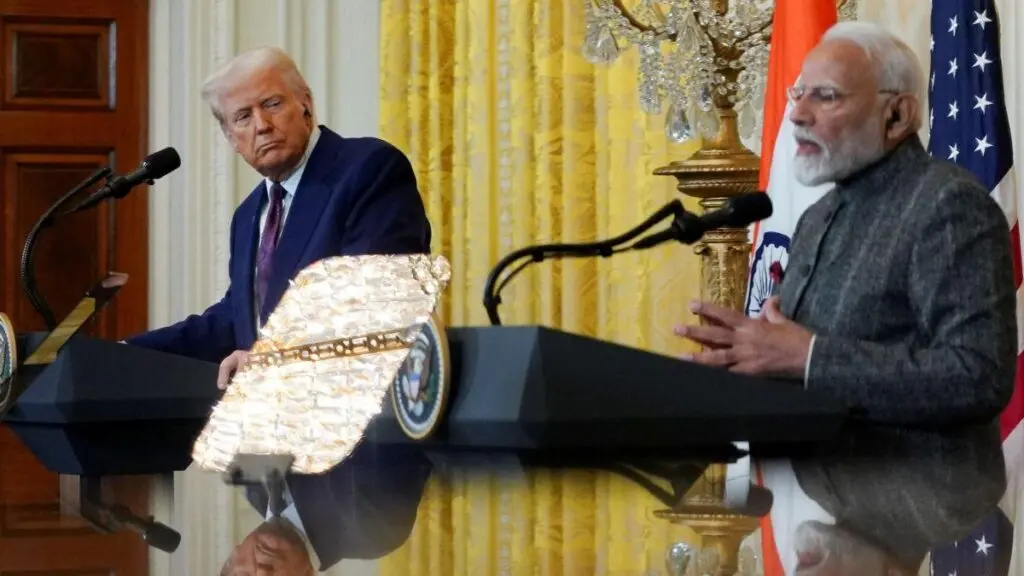
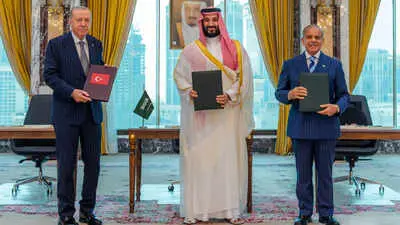
Pakistan said on Sunday that its new trilateral defence pact with Saudi Arabia and Turkiye is "purely defensive" and open to other nations. Foreign Minister Ishaq Dar said the agreement was not directed against any country and that others could join if they upheld its principles and resolved differences peacefully. The landmark Makkah Joint Defence Agreement was signed on Friday by Saudi Crown Prince Mohammed bin Salman, Turkish President Recep Tayyip Erdogan and Pakistani Prime Minister Shehbaz Sharif amid heightened US-Iran tensions.
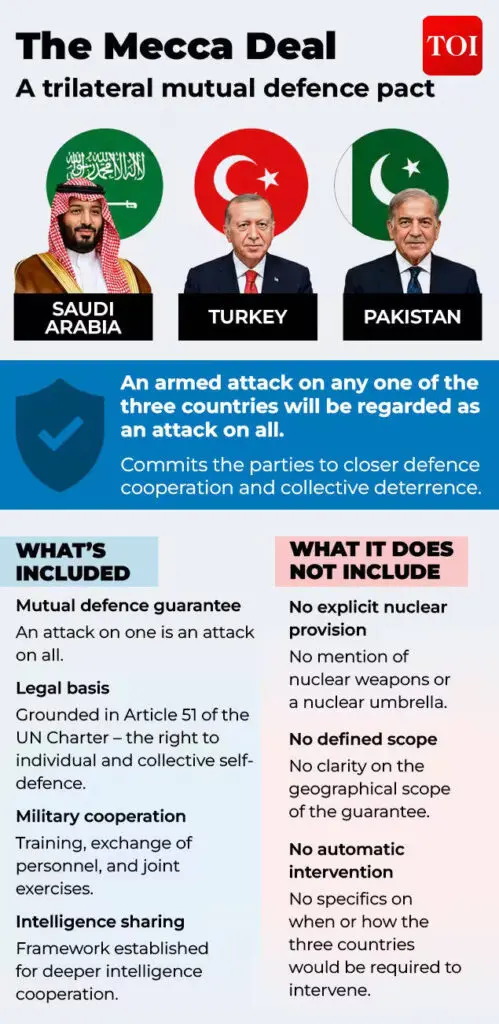
The pact includes a collective-defence provision: an armed attack on one signatory will be regarded as an attack on all three. The Hindu reports this stipulation is consistent with Article 51 of the UN Charter. Dar added that the accord does not abrogate existing bilateral or multilateral agreements. The Times of India, citing retired Lt Gen PR Shankar, downplays the pact's impact on a potential India-Pakistan conflict, saying its immediate focus is Iran, not India.
The Indian Opinion
Headlines screaming a 'new power triangle' or a 'NATO of the East' overstate what is a defensive formalisation of ties that already existed. Pakistan has long had military support from Turkiye, and Saudi money is not new. The actual test is Iran, not India. Evidence shows Riyadh's focus, its rivalry with Tehran, is the pact's core. Watch the signatories' actions, specifically whether Riyadh or Ankara support Islamabad's posture against India in any future crisis. Their words say defensive, but the geometry says Iran is the centre of gravity. The credibility of this pact rests on what happens in Tehran, not New Delhi.
Sources (4): ndtvprofit.com, thehindu.com, newindianexpress.com, timesofindia.indiatimes.com
This story was synthesised by AI from the 4 sources linked above.
Updated: this story now draws on 4 sources.