





















Now Reading: Payakaraopeta weavers struggle as saris find markets, not fair prices
-
01
Payakaraopeta weavers struggle as saris find markets, not fair prices


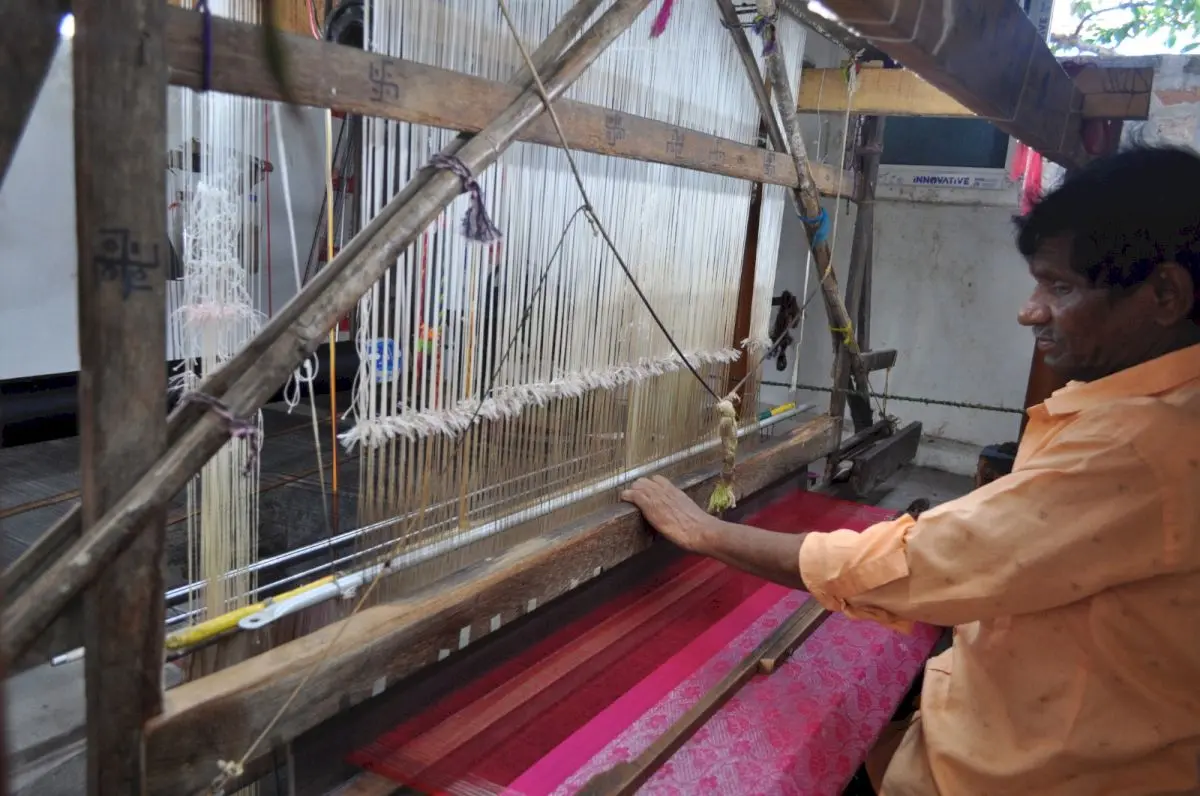
Deccan Chronicle reports that Payakaraopeta's handloom weavers in Visakhapatnam are battling mechanisation, unfair pricing, and a lack of branding. The Payakaraopeta Handloom Weavers Cooperative Society still produces traditional jamdani saris, with 24…
Deccan Chronicle reports that Payakaraopeta's handloom weavers in Visakhapatnam are battling mechanisation, unfair pricing, and a lack of branding. The Payakaraopeta Handloom Weavers Cooperative Society still produces traditional jamdani saris, with 24 women weaving daily and 292 members working intermittently. Saris take over 10 days to complete and cost between Rs 3,500 and Rs 20,000, but weavers say they earn barely Rs 6,000 a month, with one artisan noting that fair pricing is absent. Rising silk and yarn prices, along with heat from climate change that forces weavers to stop work by 10 am, have reduced output to six saris a month per worker.,In a related story, Hindustan Times reports from Yeola, Nashik, where a fusion Paithani sari blending traditional borders with Kalamkari, Bandhini, and Jamdhani motifs is testing the craft's identity. Driven by retailers, these fusion saris sell for Rs 1 lakh to Rs 5-6 lakh, and about 15% of the 500 saris sold daily in Yeola are now hybrids, up from 7-8% three years ago. Traditional weavers fear the trend dilutes the 2,000-year-old Paithani heritage, which involves 25,000 weavers and annual sales of over Rs 600 crore.,The Yeola Weavers' Association plans to collaborate with NIFT Mumbai to upskill weavers in contemporary designs while preserving tradition. In Payakaraopeta, society manager G.V. Nageshwar Rao says the industry's survival hinges on recognition and marketing support, as younger generations leave the craft and only older weavers remain.
Sources (2): deccanchronicle.com, hindustantimes.com
This story was synthesised by AI from the 2 sources linked above. Methodology and corrections.
Updated: this story now draws on 2 sources.