













Now Reading: Right to silence does not block arrest, says Supreme Court
-
01
Right to silence does not block arrest, says Supreme Court


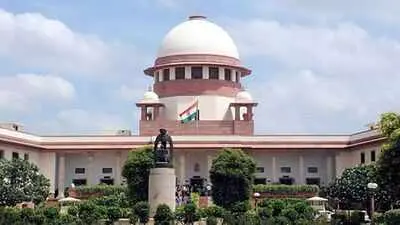
The Supreme Court on Wednesday observed that while an accused has a constitutional right to remain silent, the police equally have a right to arrest. The observation came during a hearing on a petition by Sumit Roy, personal assistant to TMC general secretary Abhishek Banerjee, who had been directed to cooperate with an investigation into a land-grabbing case in West Bengal's Salboni.
Solicitor General Tushar Mehta submitted a sealed cover report detailing Roy's alleged modus operandi in the case. The Calcutta High Court had earlier rejected Roy's anticipatory bail plea, after which the Supreme Court granted him interim protection on condition that he appear before the investigating officer daily and cooperate. Mehta told the bench that although Roy has been reporting to the IO, he has refused to answer questions.
Indian Opinion Analysis
The Supreme Court's observation that a suspect's right to silence under Article 20(3) does not insulate them from arrest restates a well-settled legal position. In India, the right against self-incrimination protects a person from being compelled to be a witness against themselves, but it does not create a right to obstruct or frustrate an investigation. The key legal test is whether the refusal to answer is a legitimate exercise of a constitutional right or a deliberate attempt to withhold cooperation. Courts in multiple cases have held that non-cooperation, including persistent silence during custodial interrogation, can be grounds for denying anticipatory bail or for granting the police the power to arrest. The immediate consequence for Sumit Roy is that his interim protection from arrest may be revoked if the Supreme Court finds his silence amounts to non-cooperation. A hearing on the matter is likely early next week, where the court will examine the sealed cover report from the Solicitor General.
Source: timesofindia.indiatimes.com
This story was synthesised by AI from the source linked above. Methodology and corrections.