












Now Reading: Student protests across India match UDISE+ data on school gaps
-
01
Student protests across India match UDISE+ data on school gaps


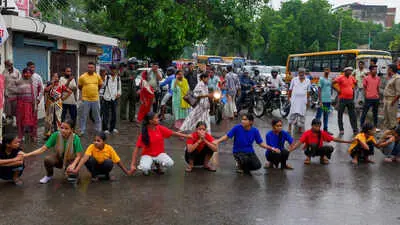
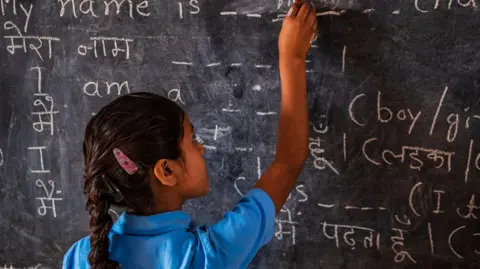
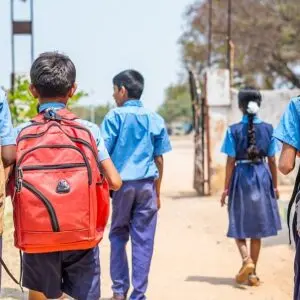
Schoolchildren in Hamirpur, Lucknow and Jaipur have taken to the streets demanding basic amenities such as usable roads, teachers, toilets and safe classrooms. Their local grievances reflect nationwide gaps documented in the Unified District Information System for Education Plus (UDISE+) NE-26 report, as reported by Times of India and Economic Times.
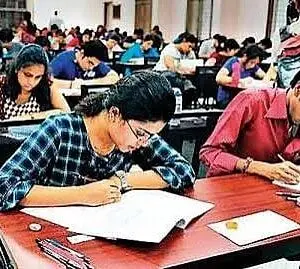
The UDISE+ data shows 1,00,843 single-teacher schools serving over 29 lakh students, while 5,663 schools have zero enrolment but 20,667 posted teachers. Only 67.4% of schools have internet, 63.1% have functional computers, and 7.1% have digital libraries. Functional toilets for children with special needs are available in just 40.1% of schools. Private schools outperform government schools on digital infrastructure, while government schools lead on ramps and accessibility.
State governments run 68.4% of India's 14.66 lakh schools. The report records 24.7 crore enrolments and 1 crore teachers nationwide, with a pupil-teacher ratio of 24.
Indian Opinion Analysis
Both Times of India and Economic Times present identical UDISE+ data and the same three protest examples, producing a uniform straight-reporting treatment. The pro-government framing is absent because neither source includes government commentary or defence. The critical framing is also absent because neither source attributes blame to any specific ministry or policy. The measured middle ground is this: the data shows real infrastructure gaps coexist with national improvements, but the article treats these as descriptive facts, not as an indictment. Readers should note that private schools outperform on digital access while government schools lead on physical accessibility, reflecting different resource priorities rather than a simple failure.
Coverage: 2 sources, 2 neutral
Sources (2): timesofindia.indiatimes.com (neutral report), economictimes.indiatimes.com (neutral report)
This story was synthesised by AI from the 2 sources linked above. Methodology and corrections.
Updated: this story now draws on 2 sources.