












Now Reading: Shanghai turns toxic riverbank into world-class park
-
01
Shanghai turns toxic riverbank into world-class park



Shanghai transformed a 14-hectare polluted industrial site along the Huangpu River into Houtan Park, opened for the 2010 World Expo. The park's wetland system cleans 634,000 gallons of river water daily, raising…
The Story in Brief
Shanghai transformed a 14-hectare polluted industrial site along the Huangpu River into Houtan Park, opened for the 2010 World Expo. The park's wetland system cleans 634,000 gallons of river water daily, raising it from Grade V, unsafe for human contact, to Grade II, suitable for irrigation. Designed by Dr. Kongjian Yu's firm Turenscape, the living filter uses gravity-fed terraces, plants, and microorganisms without chemicals or motorised equipment.
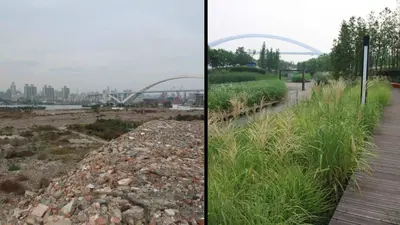
The project secured eight national design patents and has been replicated in 20 to 30 other Chinese cities. The park captures 242 tons of carbon annually, supports 93 plant and over 200 animal species, and saved $17,300 in construction costs by reusing steel and bricks from the site. It also replaced a concrete floodwall with a terraced embankment to manage storm surges.
The Indian Opinion
Indian netas love to talk of smart cities but keep dumping sewage into our rivers. Houtan Park shows a different path: treat polluted water with plants, not concrete. The usual narratives here are either 'India is too poor for such projects' or 'the West had centuries to clean up.' Neither holds water. China spent what it took and got patents, carbon capture, and a park people use. The real test for Indian cities is this: will the first budget for a similar project name the land, the river, and the contractor, or will it vanish into feasibility studies?
Source: timesofindia.indiatimes.com
This story was synthesised by AI from the source linked above.
Updated: this story now draws on 1 sources.