














Now Reading: Supreme Court upholds discharge of RPF constables for hiding cases
-
01
Supreme Court upholds discharge of RPF constables for hiding cases


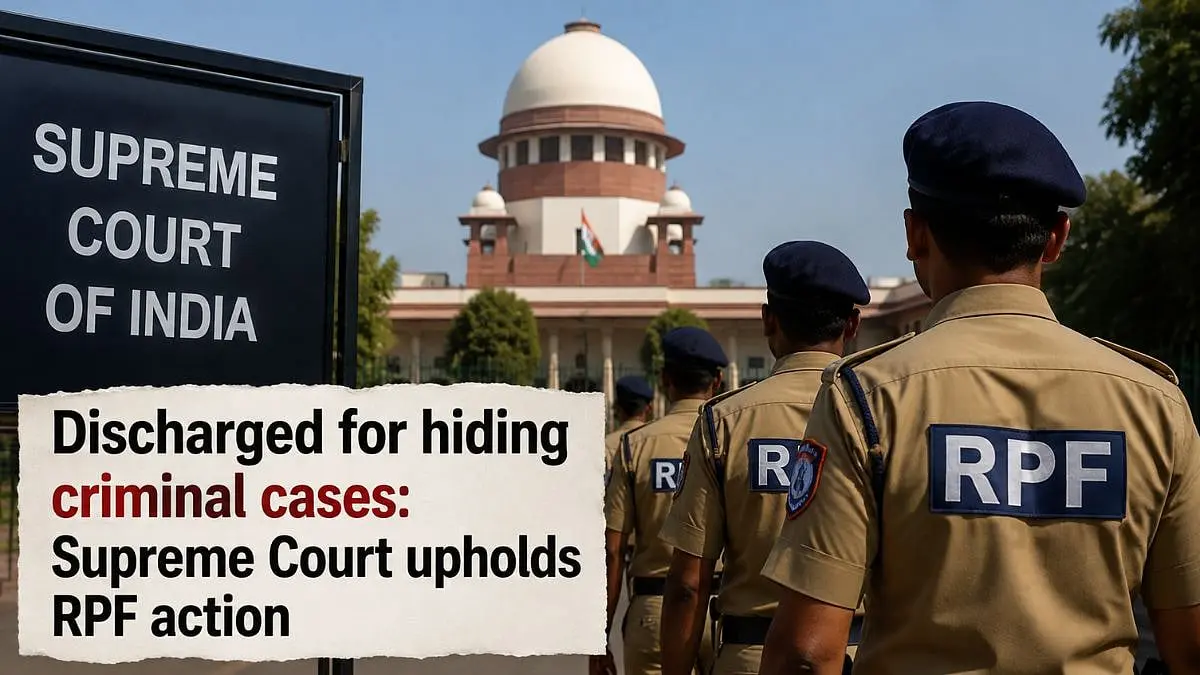
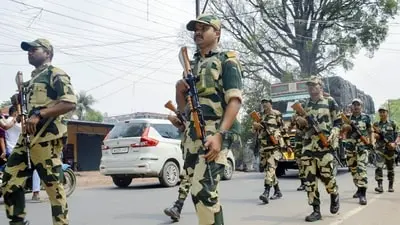
The Supreme Court has upheld the discharge of Railway Protection Force (RPF) and Railway Protection Special Force (RPSF) constables who failed to disclose pending criminal cases during their recruitment. A Bench of Justices Pamidighantam Sri Narasimha and Alok Aradhe ruled that deliberate suppression of material information about criminal antecedents has a direct bearing on an employee's character and can justify termination at any point.

The candidates cleared the written exam, physical and efficiency tests but did not disclose pending cases during document verification and medical examination. The authorities discovered the cases while the constables were undergoing training and discharged them between June and October 2015. The Allahabad High Court upheld the discharge, and the Supreme Court affirmed that decision.
The Court rejected arguments that subsequent acquittals entitled the constables to reinstatement, noting the acquittal in an earlier cited case had occurred before the attestation form was filled. The judgment relied on the 2016 Avtar Singh ruling, which held that deliberate suppression of multiple pending cases is significant and an employer may cancel candidature or terminate service.
Indian Opinion Analysis
The ruling tightens the disclosure burden on candidates for uniformed services. Under RPF Rules, suppression of pending criminal cases is grounds for discharge even years after joining. The key distinction the court made was that the candidates never pleaded ignorance of the cases, and the suppression was deliberate. The judgment does not affect cases where a candidate genuinely did not know about a proceeding. For lakhs of applicants to central armed forces each year, the message is clear: pending criminal cases must be declared, and post-recruitment acquittal does not undo a deliberate omission. The next flashpoint will be how far this principle extends to other central government recruitments.
Source: freepressjournal.in
This story was synthesised by AI from the source linked above. Methodology and corrections.