













Now Reading: Vijayawada Railway Division reaches 4,864 kWp solar capacity
-
01
Vijayawada Railway Division reaches 4,864 kWp solar capacity


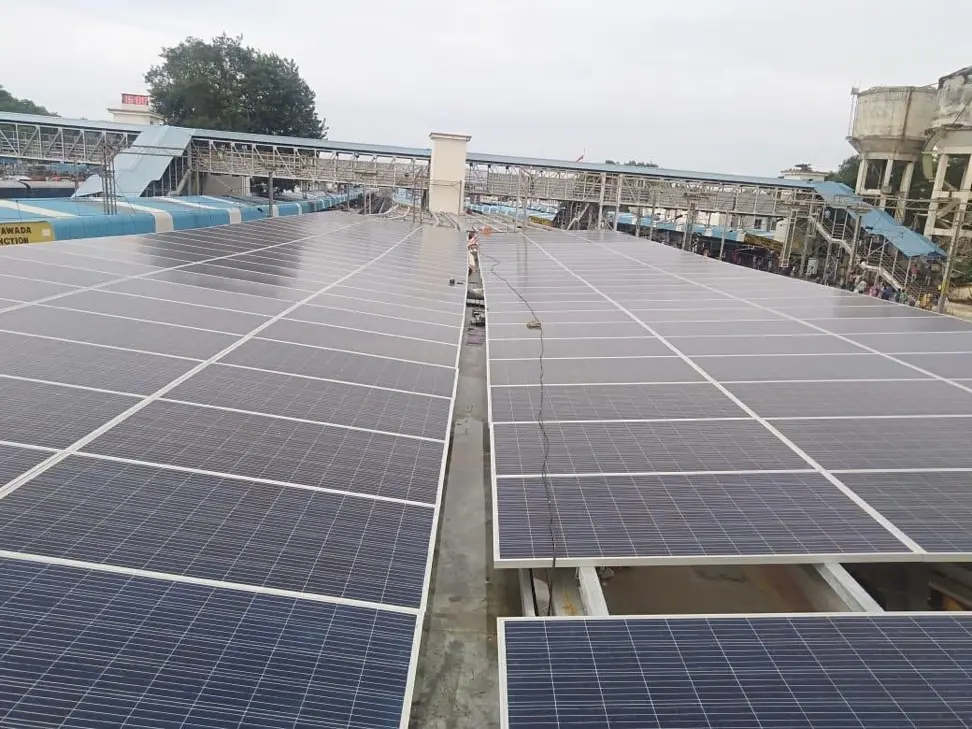
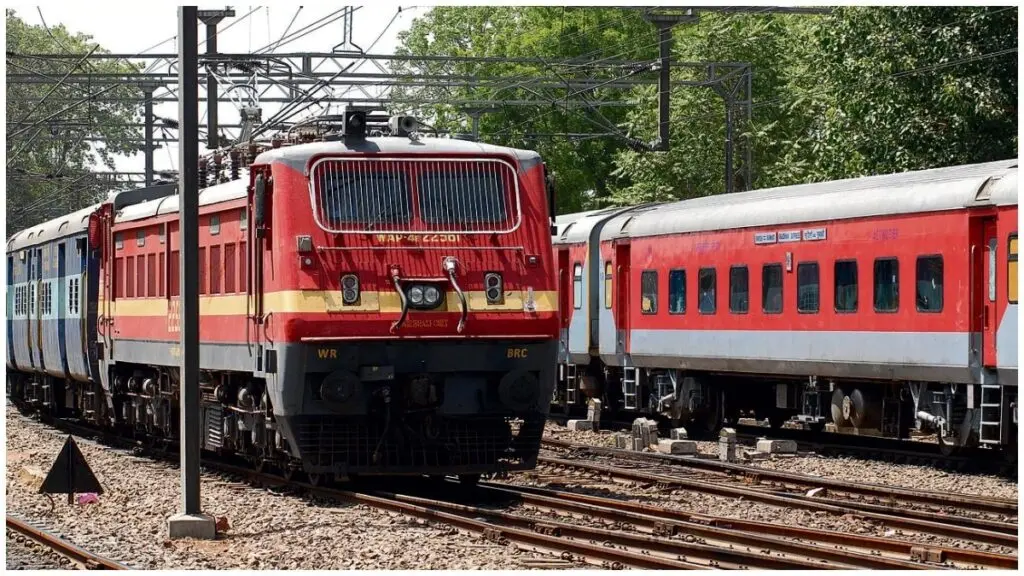
The Vijayawada Division of South Coast Railway has achieved 4,864 kWp of installed solar capacity across 265 installations, advancing Indian Railways' goal of becoming a Net Zero Carbon Emitter by 2030. Of this, 2,978 kWp is at railway stations, 1,476 kWp at service buildings, 120 kWp at staff quarters, and 290 kWp at 70 level-crossing gates.
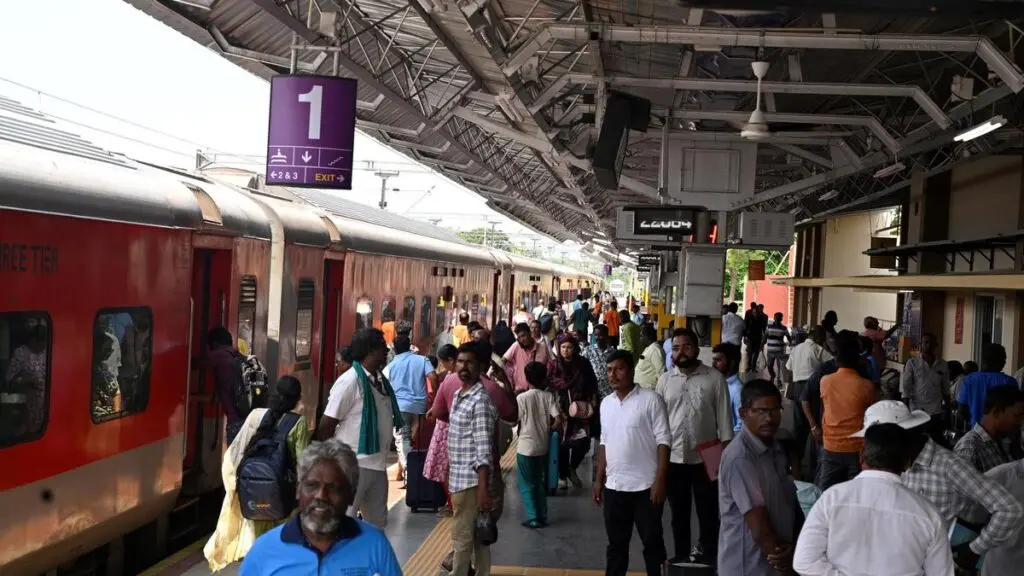
The Division generated 44,06,903 units of clean energy in 2025-26, saving Rs 461.40 lakh and avoiding 3,525.52 tonnes of carbon dioxide emissions. Between April and July 2026, it generated 19,90,741 units, saving Rs 185.54 lakh. Ten stations have become Net-Zero 'Shunya Plus' energy-neutral stations, generating surplus solar power. Vijayawada Railway Station has secured IGBC Platinum certification and features 610-kWp rooftop solar panels.
Other measures include complete LED lighting, solar water heaters of 56,700 litres per day capacity, and 81 solar-powered street lights. Head-On Generation train operations saved 1,07,757 litres of HSD oil in 2025-26, cutting diesel costs by an estimated Rs 70.80 crore and reducing emissions by 15,832.703 tonnes. The Division has also installed 3,688 bio-toilets and 252 rainwater-harvesting pits.
Indian Opinion Analysis
Indian Railways aims for net-zero carbon emissions by 2030, a target that requires each of its 68 divisions to scale up renewables. Vijayawada is among the early adopters, but the national total of 16 divisions with 'Shunya Plus' stations shows progress is uneven. What matters is the pace: the division generated 19.9 lakh units in just four months of the current fiscal, more than a third of the previous year's full total. If this rate holds, the division will exceed its 2025-26 generation figure before March. The real test is whether other divisions, particularly in coal-dependent zones, can match this trajectory. The next milestone to watch is the division's solar capacity crossing 5,000 kWp, likely within months.
Source: deccanchronicle.com
This story was synthesised by AI from the source linked above. Methodology and corrections.