











Now Reading: What unlimited health insurance actually covers: 5 key checks
-
01
What unlimited health insurance actually covers: 5 key checks


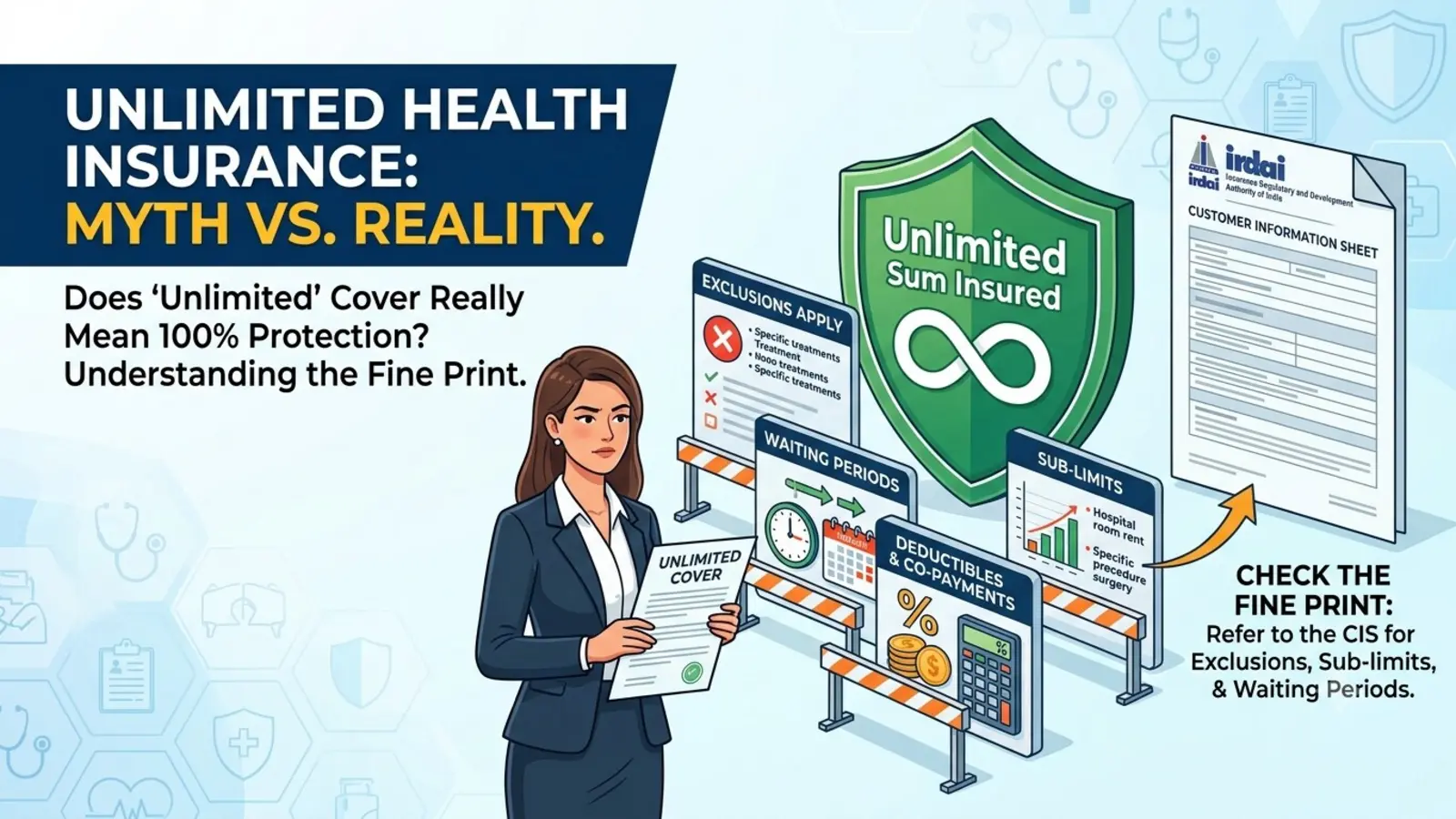
Unlimited health insurance policies rarely cover 100% of every claim, despite the name. The term usually applies only to the total sum insured, not the entire scope of care. Exclusions, waiting periods,…
Unlimited health insurance policies rarely cover 100% of every claim, despite the name. The term usually applies only to the total sum insured, not the entire scope of care. Exclusions, waiting periods, deductibles, co-payments and sub-limits continue to apply even under an unlimited plan.
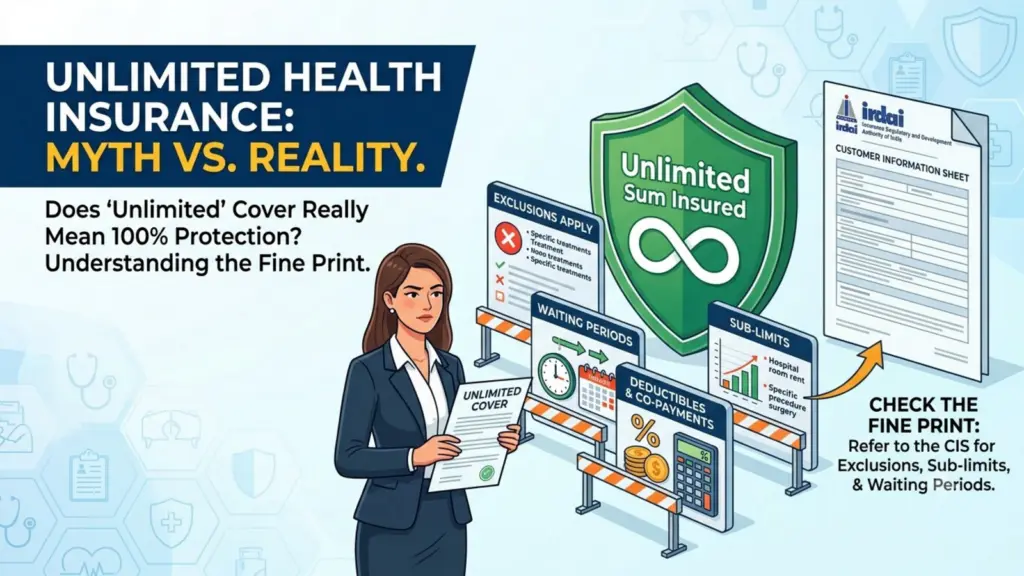
The Insurance Regulatory and Development Authority of India (IRDAI) requires insurers to provide a Customer Information Sheet summarising coverage, exclusions, sub-limits, deductibles and waiting periods. IRDAI also mandates that the maximum waiting period for any health insurance policy should not exceed 36 months.
Before buying an unlimited policy, policyholders should check what the word unlimited actually applies to, whether specific treatments have limits, and if deductibles or co-payments apply. The Customer Information Sheet is a useful starting point for these checks.
Indian Opinion Analysis
The confusion around unlimited health insurance arises because the term is a marketing label, not a regulatory definition. IRDAI does not certify a product as unlimited, it only requires disclosure of what is capped and what is not. In practice, unlimited cover helps most when a single hospital stay exceeds the usual sum insured, but the policy's fine print determines whether that stay is covered at all. The biggest risk for a buyer is assuming that unlimited sum insured means unlimited coverage of procedures, pre-existing conditions or room rents. The next step is to read the Customer Information Sheet line by line, not just the policy brochure, before signing.
Source: livemint.com
This brief was synthesised by AI from the source linked above.