




Now Reading: World first: captive-bred slender-billed vultures released in Assam
-
01
World first: captive-bred slender-billed vultures released in Assam


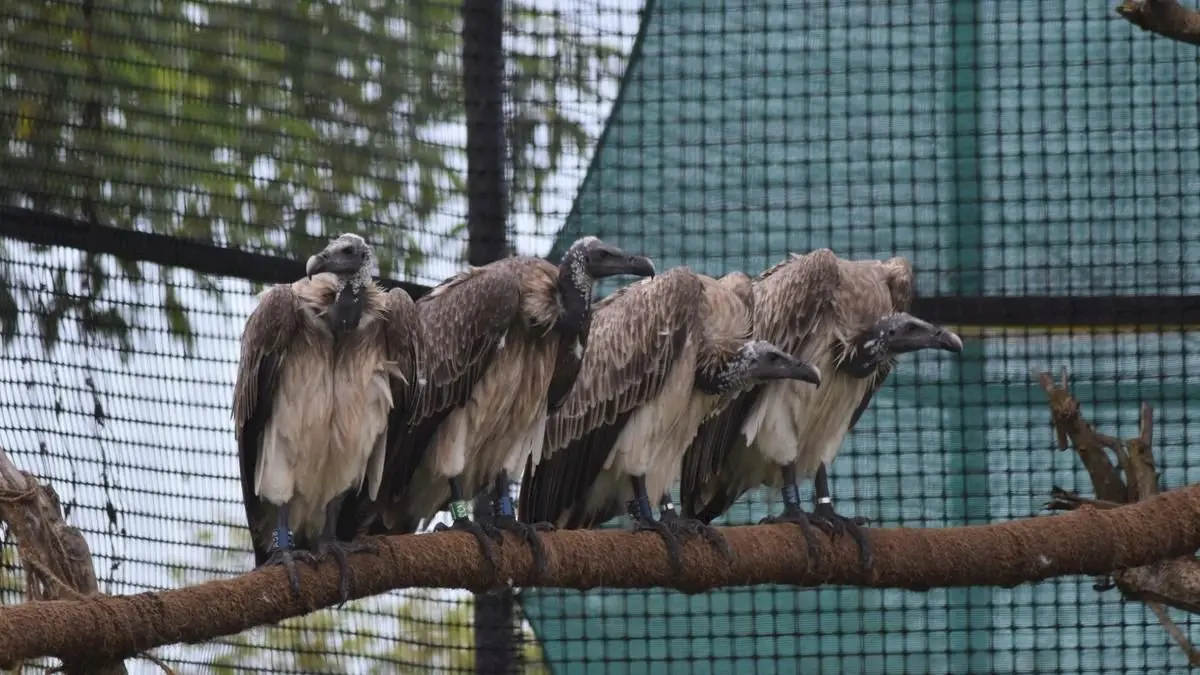
Assam has achieved a global first by releasing captive-bred slender-billed vultures into the wild. Five slender-billed vultures and five white-rumped vultures were set free on August 7 at the Jatayu Soft Release…
The Story in Brief
Assam has achieved a global first by releasing captive-bred slender-billed vultures into the wild. Five slender-billed vultures and five white-rumped vultures were set free on August 7 at the Jatayu Soft Release Centre in Kaziranga National Park and Tiger Reserve. The birds were bred at the Bombay Natural History Society's Vulture Conservation Breeding Centre in Rani and acclimatised for three months at the release site. All 10 vultures carry colour rings and GSM-GPS satellite transmitters for tracking.
Both species are critically endangered. India's Gyps vulture population has dropped 99% in 20 years, mainly due to veterinary painkillers. Although the centre banned four such drugs, pesticide poisoning from laced carcasses remains a deadly threat in Assam. Over 700 vultures have died from secondary poisoning in the state since 2018. Conservationists run awareness drives to curb the illegal use of toxic pesticides on livestock carcasses.
The Indian Opinion
This release is rightly celebrated, but the narrative that a single soft release solves the crisis is one-sided. The real test is post-release survival: the vultures must avoid the pesticide-laced carcasses that have killed hundreds in Assam. Will the GPS transmitters reveal that released birds quickly stray into poisoned areas? Until that data arrives, we have only hope, not proof. The question is not whether the vultures were bred well, but whether the wild they return to is safe for them.
Sources (2): thehindu.com, assamtribune.com
This story was synthesised by AI from the 2 sources linked above.
Updated: this story now draws on 2 sources.